Your Complete Rehab Preparation and Packing Checklist
A rehab packing checklist helps you bring identification, admission papers, approved medicines, comfortable clothes, toiletries, and recovery items. Before leaving, check the facility’s rules, medicine policy, visitor guidance, and banned-item list. Pack lightly for your stay, label your belongings, and leave valuables, alcohol, drugs, unsafe items, and unapproved electronics at home. Ask the admissions team what inpatient rehab requires because each rehabilitation center has its own rules. A prepared bag can prevent delays and help you focus on treatment from day one.
Contact Us TodayWritten by Prasanta Dash, Founder & Managing Trustee · 10 years of local experience
What to Bring to Rehab: The Essential Checklist?
Inpatient rehabilitation packing should include identification, admission papers, approved medicines, comfortable clothes, toiletries, prescribed medical devices, and a few permitted personal items. Every rehabilitation center follows different rules, so check its banned-item list, laundry plan, storage limits, electronics policy, and medicine process before packing.
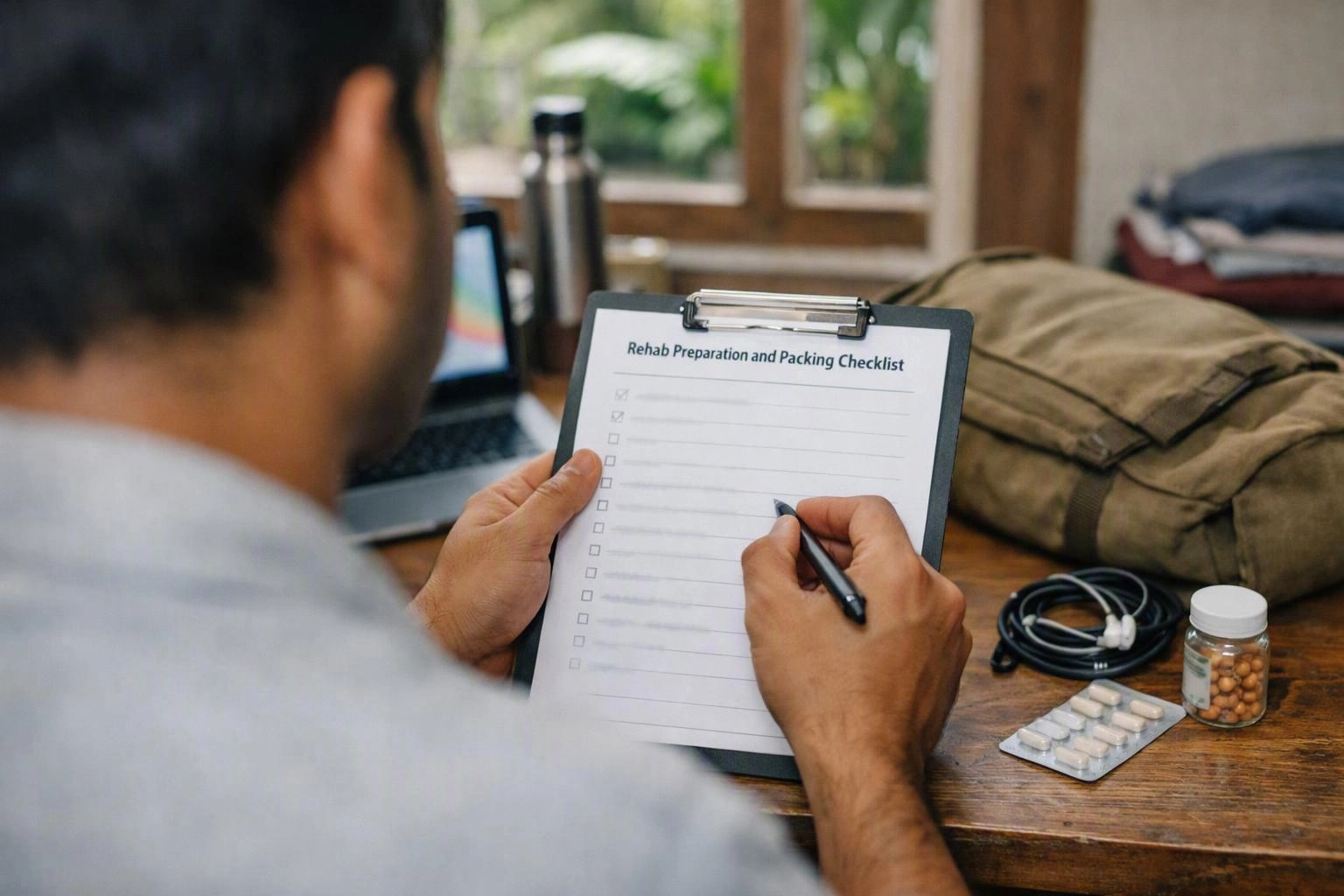
This practical rehab packing list helps first-time residents and their families prepare. It also suits people moving from detoxification or hospital care into residential treatment. Pack for comfort and use, not appearance. Shared rooms may have little closet space, and some programs provide towels, bedding, toiletries, or laundry supplies.
Start with a small, washable wardrobe for your expected stay. Many programs allow clothes for about seven to fourteen days, with laundry during treatment. Check this range with admissions because storage space, laundry days, and clothing rules can differ.
Keep documents and medicine details in one clearly marked folder. A family member can help collect medical records, insurance details, and emergency contacts. Staff must still confirm the information with the resident whenever possible. Don’t pack loose tablets, supplements, or products without labels.
For a drug rehabilitation packing list or detox admission checklist, ask about withdrawal care, supervised medicine, and medical equipment. A recovery journal, reading material, or family photographs may help, but the program must approve them first.
People seeking support from the Rehabilitation Centre in Bhubaneswar may hear similar advice from Rehab Center Bhubaneswar: ask before arriving, label belongings, and bring only approved items. Local service names don’t replace the facility’s written admission requirements.
At Steps Deaddiction & Mental Health Services, we encourage families to call admissions when an item is uncertain. Clear questions are safer than guessing, and they can make the first day easier.
Before You Go to Rehab: What to Expect
Rehab admission usually starts with an assessment, paperwork review, health screening, belongings check, orientation, and treatment planning. Before leaving, arrange transport, tell key contacts, follow medicine instructions, and handle work or childcare duties. Ask the rehabilitation center what to expect during intake, detoxification, or the first day of care.
Use the steps below as a healthcare admission planning guide. The order may change if someone needs urgent medical care, withdrawal support, or hospital transfer.
Families shouldn’t hide difficult information to protect a loved one from shame. Accurate medical history helps staff spot risks and choose suitable care. If you’re using “How to Talk to a Loved One About Going to Rehab,” focus on safety, treatment goals, and practical support instead of blame.
What Documents Are Needed for Rehab?
Admission documents often include government-issued identification, insurance or payment details, referral papers, medical records, medicine details, emergency contacts, and signed consent forms. Bring original documents when asked, and keep paper or digital copies available. The admissions team can confirm which records your program needs and whether a family member can submit missing papers.
A government-issued ID may be a passport, driving licence, voter identification, or another accepted document. Insurance details may include the policy card, member number, authorisation details, and payer contact information. If you’re paying yourself, ask which payment forms must be completed before admission.
Bring recent medical records when available. These may include discharge summaries, laboratory reports, mental health assessments, allergy details, surgery history, and past treatment information. Your prescription list should show each medicine, strength, dose, timing, prescriber, and reason for use.
Staff check medicine history, medical history, emergency contacts, and consent forms during intake. This helps them spot medicine interactions, withdrawal risks, safety concerns, and communication preferences. A chosen family member can help find missing records, but privacy rules still protect the resident.
Include the emergency contact’s full name and current details. Tell admissions if that person shouldn’t receive information. People entering addiction or mental health rehabilitation may need extra consent forms for information sharing, treatment choices, or family involvement.
What Should I Pack for Inpatient Rehab?
Inpatient rehab packing should focus on practical, comfortable, washable items that follow facility rules. Pack clothes for your expected stay, suitable shoes, basic toiletries, prescribed medicines in original containers, needed medical equipment, and a few recovery items. Avoid extra luggage because storage, security, and laundry plans vary by rehabilitation center.
Use one small suitcase or soft bag if possible. Shared rooms and limited storage can make extra items hard to manage. Label clothes and personal items with the resident’s name or initials, especially when laundry is shared.
Ask about laundry access before choosing how many outfits to pack. Some programs provide laundry facilities or collect clothes, while others use a set process. Staff may also store and hand out personal toiletries.
Prescription medicines need special care during admission. Staff may store them securely, check them with a pharmacy, and give them on a nurse-led schedule. Never stop a prescribed medicine without medical advice.
Items to Confirm with the Rehabilitation Center
Facility policy decides which clothes, toiletries, electronics, medicines, food, books, and personal items a resident may keep. Check these rules before packing instead of assuming household items are allowed. A short call with admissions can prevent delays, confiscation, extra purchases, or stress during the belongings check.
Ask for the current banned-item list and explain any special needs. Rules may be stricter during early recovery, detoxification, or mental health stabilisation. The questions below cover areas that often differ between programs.
| Area | What to confirm | Why it matters |
|---|---|---|
| Electronic devices | Whether phones, tablets, laptops, chargers, cameras, or headphones are permitted | Privacy, distraction, and communication rules vary |
| Medication storage | Which prescription medications, vitamins, inhalers, and pain relievers staff must hold | Supports safe medication management |
| Visitor policy | Approved visitors, visiting times, identification, and items visitors may bring | Helps families plan without disrupting treatment |
| Personal items | Food, books, sentimental items, cosmetics, cash, and storage limits | Reduces loss, conflict, and unnecessary packing |
| Laundry supplies | Laundry days, detergent rules, collection bags, and labelling requirements | Prevents overpacking and misplaced clothing |
Don’t assume a familiar item is harmless. A facility may restrict aerosol products, sharp grooming tools, strong scents, cords, or clothes with offensive images. Written guidance helps, but admissions should provide the final check.
How Staff Check Belongings During Admission?
Belongings inventory procedures help rehabilitation staff protect residents and keep treatment safe. Staff may inspect, list, label, store, or return items that are restricted or unnecessary. Residents should report medicines, medical devices, and safety concerns honestly. Ask where valuables are stored, and request help with any unclear item.
During the belongings check, staff may ask the resident to open bags, pockets, containers, and toiletry kits. It’s a safety check, not a judgment about character. The process helps identify banned items, unapproved medicines, duplicate belongings, and objects that could create risks in shared rooms.
Staff usually record approved belongings and list items placed in secure storage. Ask if stored property will be returned at discharge and whether you’ll receive an inventory copy. Don’t bring cash, jewellery, expensive watches, or irreplaceable property.
Privacy still matters during admission. Staff should handle health details and belongings with care, while residents should report allergies, medical devices, trauma concerns, or safety worries. If a rule is unclear, ask why it exists and what alternative is available.
People moving from hospital care or detoxification may arrive with extra medicines, medical equipment, or discharge property. Tell staff what came from the hospital so it can be checked, stored, or safely transferred into treatment.
Red Flags: Items You Should Not Bring to Rehab
Prohibited items often include alcohol, illegal drugs, drug tools, unapproved medicines, unsafe toiletries, weapons, and valuable property. Rules differ by program, so check the facility’s list before arrival. If you’re unsure about an item, tell admissions instead of hiding it or giving it to another resident.
Don’t hide a restricted item in another person’s luggage. Tell staff about it privately and follow their instructions. Honest disclosure protects the resident, other residents, and the treatment setting.
After Packing: Final Steps Before Treatment Begins
Aftercare planning starts before admission, even though the full plan may come later. After packing, confirm the admission date, arrival time, transport, contact person, medicine instructions, payment or insurance details, and emergency plans. Tell trusted people how communication will work during treatment, while protecting your privacy. These steps can lower stress and support treatment from the start.
Use this final preparation sequence the day before travel and again on admission morning.
Families can lower pressure by giving one person the paperwork and another person transport or home duties. A resident may feel anxious, unsure, or tired, especially after detoxification or hospital care. Calm, practical support often helps more than repeated persuasion.
Ask when discharge planning starts and how aftercare will cover therapy, medicine follow-up, peer support, relapse prevention, housing, work, and family communication. Treatment is a process, not a test completed on arrival. Bring questions and share concerns early so staff can respond safely.
When your bag, documents, and transport are ready, focus on the next safe step. A simple checklist can’t replace clinical advice, but it can prevent avoidable admission problems.
Questions About Rehabilitation Center
What to Bring to Rehab Checklist?
Bring government-issued ID, admission documents, insurance details, medical records, prescription medicines in original containers, comfortable clothing, closed-toe shoes, toiletries, needed medical devices, and a few approved recovery items. Confirm storage, laundry, electronics, visitor, and banned-item rules before travelling.
What to Bring to Rehab?
Pack practical, washable clothes, suitable shoes, basic toiletries, approved medicines, medical equipment, identification, and treatment papers. Bring only permitted items because shared rooms, limited storage, medicine checks, and safety screening can limit personal belongings.
What Documents Are Needed for Rehab?
Most programs ask for government-issued identification, insurance or payment details, referral papers, medical records, a current prescription list, emergency contact information, and signed consent forms. Ask admissions if you need original documents, copies, or extra hospital and detoxification records.
What Should I Pack for Inpatient Rehab?
Pack modest, comfortable clothes for the expected stay, closed-toe shoes, approved toiletries, prescription medicines in original containers, needed medical devices, and a journal or book if allowed. Avoid valuables, alcohol, illegal drugs, weapons, loose medicines, and unapproved electronics.
What to Expect Before Going to Rehab?
Expect a pre-admission assessment, intake papers, health screening, medicine checks, belongings inspection, orientation, and treatment planning. Before leaving, confirm transport, admission time, emergency contacts, medicine instructions, family communication, home duties, and steps for withdrawal management.
Author: Prasanta Dash
Have a question about admission preparation? Contact our team for guidance about documents, approved belongings, and treatment entry.
Related Resources
How Much Does Rehabilitation Cost in Bhubaneswar?
rehabilitation centre cost Bhubaneswar
How It WorksWhat Happens When You Contact a Rehab Centre? The Admission Process Explained
rehab centre admission process Bhubaneswar
How It WorksNeed Rehab Quickly? How to Arrange an Urgent Assessment
urgent rehab admission Bhubaneswar
Everything About ItRehabilitation Centre Cost and Programme Duration: What Families Should Ask
rehab centre cost and duration in Bhubaneswar