Biopsychosocial Assessment
This gives the care plan a safe starting point.
Heat, humidity, and storm exposure make calm indoor care especially relevant here.
Personalised treatment plans link addiction and mental health needs.
Detoxification help helps families understand withdrawal risks.
Family teaching supports safer boundaries after treatment.
Psychotherapy addresses anxiety, depression, stress, and harmful patterns.
Residential care offers structure when home routines feel unsafe.
Coverage around Bhubaneswar helps families plan visits within the service area.
Best deaddiction centre is a rehabilitation service that supports substance use and related mental health recovery.
According to World Health Organisation (2016), total alcohol consumption in India was estimated at 5.7 litres of pure alcohol per person aged 15 years and older, indicating potential demand for alcohol-use treatment.
Source: World Health Organisation·Year: 2016
Data from World Health Organisation (2016) shows that the estimated prevalence of alcohol use disorders among people aged 15 years and older in India was 4.6%.
Source: World Health Organisation·Year: 2016

Our Best deaddiction centre services are available throughout Bhubaneswar. Addiction care needs more than a short conversation. A proper pathway links screening, withdrawal planning, psychotherapy, psychiatric review, family counselling, and relapse prevention. The aim is to reduce immediate risk while building routines that can continue after residential care. Needs can differ between central areas and the wider Khordha district. Heat, humidity, and seasonal storms can also affect travel and daily routines. A frequent mistake is starting admission before checking withdrawal risk, mental health symptoms, medicines, and family capacity. Our process uses a simple assessment before treatment planning, so detoxification help and aftercare match the person’s needs. Motivational interviewing supports honest discussion instead of forced promises.
This gives the care plan a safe starting point.
The result guides detoxification advice and medical referral.
Motivational interviewing explores ambivalence without blame.
Each part has a clear role in recovery.
This supports safer routines after simple treatment ends.
Steps Deaddiction & Mental Health Services holds every Best deaddiction centre engagement to the same standard—from first enquiry through completed work. Here is what guides our process.
Every Best deaddiction centre case is reviewed against our own checks before sign-off, so you receive exactly what was agreed.
Clear documentation at every stage—what we reviewed, what we found, and what happens next.
Dedicated communication throughout the process—from your first enquiry to completed Best deaddiction centre.
A few details can help the clinician understand risk and plan the next step.
The first assessment records substance use, withdrawal history, health, mood, medicines, safety risks, and family support.
The findings guide treatment planning and medical referral when needed.
Relapse prevention reduces risk by planning for triggers, disrupted routines, poor sleep, and isolation during humid monsoon periods.
Families should seek clinical advice when warning signs increase instead of waiting for a return to heavy use.
Best deaddiction centre care supports alcohol, drug, and mental health recovery through assessment, treatment planning, and aftercare.

Same-day booking or priority scheduling can begin with an assessment of withdrawal risk, treatment fit, family needs, and the first follow-up steps.
Bhubaneswar, Odisha
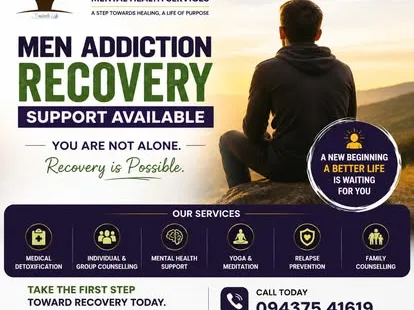
A person in Bhubaneswar, Odisha stops drinking before an important work deadline, then develops shaking and confusion. Past home attempts ended with renewed drinking, so the family wants realistic help about timing and upkeep. A safe next step is urgent clinical advice, not sudden unsupervised stopping.
Travel, childcare, and work capacity can limit residential treatment choices in Bhubaneswar, Odisha. A family may worry that a person cannot attend every appointment or remain away from home. Treatment planning can then separate urgent safety needs from counselling, psychiatric help, and aftercare tasks. The family receives transparent next steps before deciding.
The decision should rest on assessment, treatment fit, family part, and follow-up, not claims alone. We’d explain residential and non-residential options, relapse-prevention work, and the information needed for a safe plan.
The health and wellness information on this website is for general informational purposes only and is not medical advice. It does not create a provider-patient relationship. Always consult a qualified licensed provider about your specific condition before making care decisions. Individual results vary.
94375 41619