How to Avoid Mistakes When Choosing a Rehabilitation Centre
People choosing a rehab center should check clinical fit, trained staff, personal care plans, safety steps, total costs, family support, and aftercare. Common mistakes include choosing only by price and trusting unclear promises. Families may also overlook medical needs, mental health concerns, relapse support, or centre policies. Compare several rehabilitation centres, ask direct questions, and request written details before admission. Confirm that the program can safely manage substance use, withdrawal risk, co-occurring conditions, and recovery goals. At Steps Deaddiction & Mental Health Services, we help families understand care options and prepare useful questions before admission.
Contact Us TodayWritten by Prasanta Dash, Founder & Managing Trustee · 10 years of local experience
Rehabilitation centre selection requires a review of clinical fit, safety, treatment quality, clear costs, and continuing care. The safest choice isn't always the cheapest or most advertised option. A careful review should show how the centre checks substances used, withdrawal risks, age, physical health, and mental health before suggesting residential treatment or outpatient care.
Families should ask what daily treatment looks like. Key details include therapy, medicine and detox rules, privacy, family contact, living arrangements, emergency steps, discharge planning, and referrals after treatment. Clear answers help separate real addiction treatment from a vague sales promise.
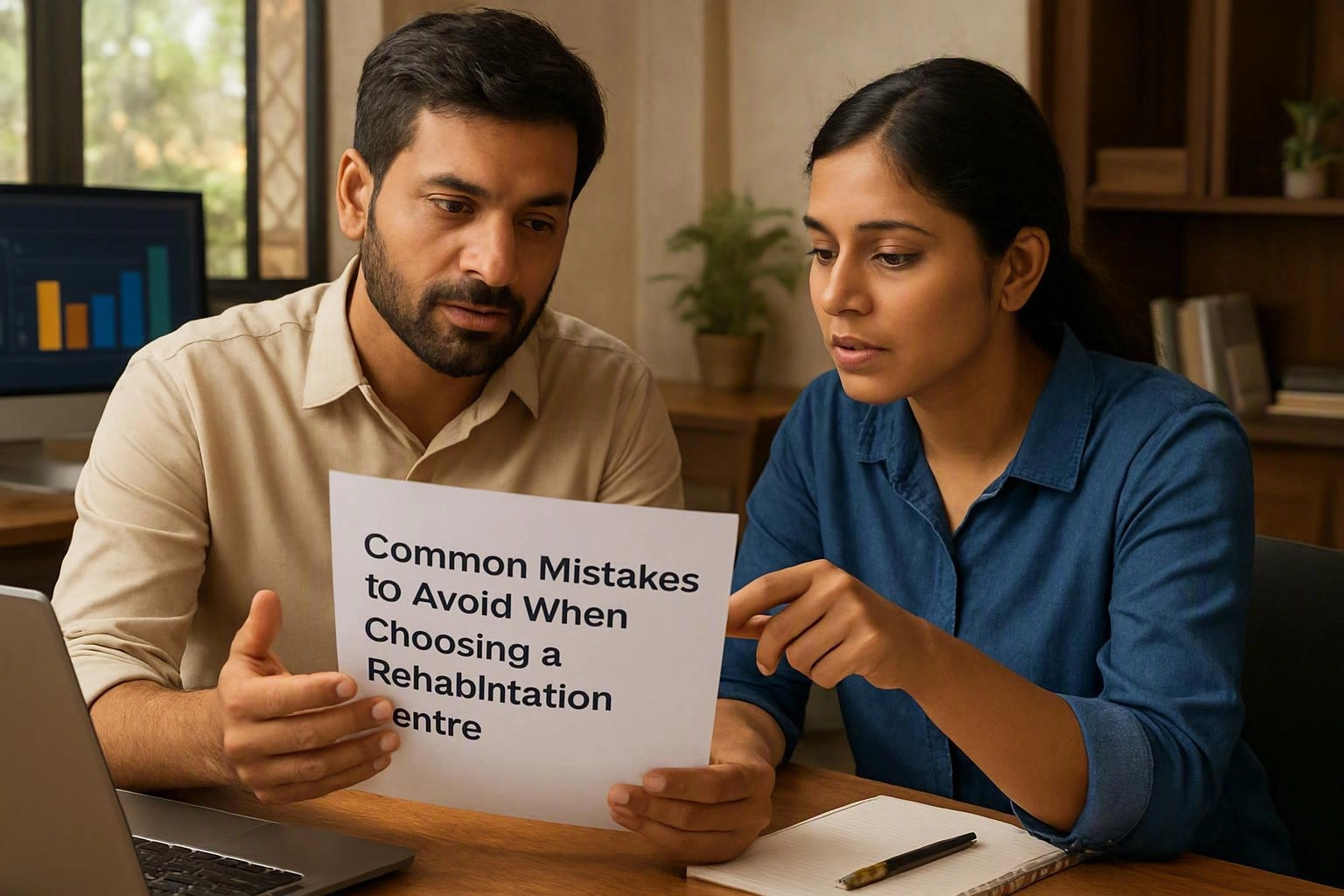
Common Mistakes to Avoid When Choosing a Rehab Center
Rehabilitation centre selection should start with clinical fit, safety, trained care, clear costs, and ongoing support. People often choose poorly by comparing only prices or trusting claims they haven't checked. They may also ignore mental health needs or fail to review centre policies. A simple comparison helps families choose care that fits the person and their recovery goals.
A poor choice can lead to unsafe withdrawal, stopped treatment, surprise charges, weak relapse support, or delayed specialist care. Ask for written information before deciding. Compare the assessment process, staff, therapies, medicine rules, family support, and aftercare.
A suitable rehabilitation facility should explain who provides care and how treatment is planned. It should also explain how it protects patients. A responsible centre will say when its program isn't suitable and suggest another service.
Mistake 1: Choosing a Rehab Center Based Only on Price
Low cost can seem helpful during a stressful admission decision, but price alone doesn't show the value of treatment. A cheaper program may leave out medical detox, medicine reviews, therapy, family counselling, transport, or continuing care. The result may be another admission, a medical crisis, or lost recovery time.
Ask for a full written cost comparison. Check what's included and what's optional. Ask whether charges rise when care needs change, and find out what happens if treatment ends early. Affordability matters, but so do clinical care, staff access, living conditions, and safety. Compare total costs and exclusions instead of relying on one headline fee.
Mistake 2: Trusting Promises of Guaranteed Recovery
No ethical provider can guarantee a certain recovery result. Substance dependence is shaped by health, home life, support, motivation, trauma, and continuing care. Claims of a permanent cure may hide weak relapse support and unrealistic expectations.
Look for honest details about treatment limits, common challenges, and possible results. Ask how the team tracks progress and responds to setbacks. Find out how it changes the treatment plan when needed. Ethical marketing explains services clearly instead of using fear or certainty to pressure families. Choose a centre that treats relapse as a risk to manage, not proof of failure.
Mistake 3: Ignoring Medical Detox and Withdrawal Safety
Some substances can cause dangerous withdrawal. Medical detoxification and withdrawal care must be checked before admission. Alcohol, sedatives, and some other substances may need close medical supervision. Stopping suddenly without a safety plan can cause seizures, severe confusion, dehydration, or other emergencies.
Ask who performs the medical assessment and whether a doctor or nurse is available. Check how medicines are managed and how emergencies are handled. Confirm whether the centre can transfer a patient to hospital care. A responsible program checks the substance, amount, use pattern, past withdrawal, health, age, and other medicines. Avoid any setting that treats detox as routine without checking personal risk.
Mistake 4: Overlooking Mental Health and Co-Occurring Disorders
A person may have depression, anxiety, trauma, psychosis, bipolar disorder, or another mental health disorder alongside substance dependence. This is called a dual diagnosis. Ignoring it can make treatment less helpful. It may also raise the risk of relapse, self-harm, conflict, or early discharge.
Ask whether admission includes a mental health assessment. Check if the centre screens for co-occurring conditions. Integrated treatment should address substance use and mental health together. It should also include clear medicine rules and referrals for specialist care. Choose a team that can explain how therapy, medical reviews, crisis support, and follow-up work together.
Mistake 5: Failing to Check Staff Qualifications and Daily Care
Advertising may describe a caring place without saying who provides daily care. Families should ask about each addiction counsellor’s role. They should also check the clinical team’s credentials, supervision, and experience with the substance and age group.
Staff attention affects safety, communication, and early detection of mood or withdrawal changes. Ask who stays overnight and who manages medicines. Find out how concerns are reported and how often clinicians review progress. Weak staffing can mean delayed help or an outdated treatment plan. A clear centre should explain who joins the care team and when another service is needed.
Mistake 6: Accepting a One-Size-Fits-All Treatment Plan
People differ in substance use, health, age, family life, work, trauma, and recovery goals. A fixed schedule can miss these differences. It may lead to poor engagement, unnecessary limits, or a quick return to substance use after discharge.
An individualized treatment plan should explain the recommended care level and its goals. It should also cover therapy, medicine reviews, and progress checks. Helpful therapy may include individual sessions, group work, skills training, motivational approaches, or trauma-aware care. Ask how the plan changes when the person improves, struggles, or develops a new health concern. Personal care isn't an extra. It's part of responsible treatment.
Mistake 7: Neglecting Family Involvement and Aftercare
Recovery usually continues after residential treatment ends. Without family support and aftercare, a person may return to the same pressures without help. This can lead to missed warning signs, conflict at home, and a higher relapse risk.
Ask if family therapy or family counselling is available. Check how consent and privacy are handled. Find out how relatives can help without taking control. A relapse prevention plan should list triggers, coping steps, emergency contacts, support groups, medicine follow-up, and referrals. Continuing care may include outpatient visits, peer support, mental health treatment, or community services. The guide “Supporting Someone With Addiction Without Enabling Them” can help families set kind, clear boundaries.
How to Choose a Drug Rehab Centre Carefully?
Drug rehabilitation selection should match the person’s substance use, withdrawal risk, physical health, mental health, home setting, and treatment goals. Compare assessment, medical support, therapy, living arrangements, family contact, costs, discharge planning, and aftercare. Ask for written answers so key differences are easy to see.
Use a clear process to reduce decision risks. The first comparison may take several conversations over a few days. Records, medicine lists, or a medical referral may be needed.
We can discuss how substances, withdrawal risks, age, physical health, and mental health affect the care pathway. If a service can't safely meet a person’s needs, a responsible rehabilitation referral should be considered instead of forced admission.
What Questions Should I Ask a Rehab Centre?
Ask questions that show how care works each day. Written answers make it easier to compare admission rules, treatment schedules, privacy, medicine policies, and discharge planning.
These questions also show whether staff support informed consent. If answers are vague, rushed, or inconsistent, pause before deciding and compare another provider.
What Should I Look for in a Rehabilitation Centre?
Look for a rehabilitation centre that connects assessment results with safe care, trained professionals, suitable therapy, clear fees, and aftercare. The table below offers a practical way to compare an addiction treatment centre.
| What to check | What a clear answer includes | Warning sign |
|---|---|---|
| Clinical suitability | Assessment of substances, withdrawal risk, health, age, mental health, and goals | Admission is offered without meaningful screening |
| Qualified professionals | Named roles, professional credentials, supervision, and access to medical review | Staff responsibilities are unclear |
| Facility safety | Medication control, privacy rules, overnight support, and emergency procedures | No clear emergency or transfer process |
| Evidence-informed therapy | Therapy matched to needs, progress reviews, and mental health support | One method is presented as suitable for everyone |
| Transparent fees | Written total costs, exclusions, payment terms, and early-exit policy | Important charges appear only after admission |
| Aftercare services | Discharge plan, relapse prevention, referrals, family support, and follow-up | Care ends without a next-step plan |
Ask the provider to describe daily treatment in plain language. We can explain therapy access, medicine and detox rules, family contact, living arrangements, emergency steps, discharge planning, and continuing care.
When Is It Time to Call a Rehabilitation Professional?
A rehabilitation professional should be contacted when substance use is hard to control, withdrawal may be dangerous, or attempts to stop have failed. Help is also needed when substance use affects health, work, relationships, or safety. Urgent medical care is needed for overdose signs, severe confusion, seizures, breathing problems, or immediate self-harm risk.
Don't wait for a crisis if use is increasing or being hidden. Needing larger amounts, missing responsibilities, or having strong cravings are also warning signs. A professional assessment can clarify dependence, withdrawal risk, dual diagnosis concerns, and the safest care level.
In an emergency, contact local emergency services or visit the nearest emergency department. Detox shouldn't be delayed when the person may be medically unstable.
Make a Safer, More Informed Rehab Decision
An informed rehab decision compares safety, clinical skills, personal care, communication, total cost, and aftercare. It shouldn't rely on advertising or one recommendation. Families should list their needs, speak with the centre, review policies, and confirm the suggested care level. The right program explains its care clearly and honestly.
Before signing, write down immediate risks, treatment goals, health needs, privacy choices, family contacts, and budget limits. Confirm consent, care coordination, record sharing, and the steps taken if the program isn't suitable. Good care includes referrals when a different or higher level of help is needed.
Our team can discuss recovery support and help families prepare questions without pressure. If you are comparing the Best rehabilitation centre in Bhubaneswar with an Affordable rehab centre Bhubaneswar option, use the same safety, clinical, cost, and aftercare checks for both. A careful choice protects dignity now and supports care after discharge.
Author: Prasanta Dash
Questions About Rehabilitation Center
What Are the Common Mistakes When Choosing a Rehab Center?
Common mistakes include choosing only by price, trusting guaranteed-recovery claims, and ignoring medical detox or withdrawal safety. Other mistakes include overlooking dual diagnosis, failing to check staff qualifications, accepting a fixed treatment plan, and neglecting family therapy or aftercare. Compare clinical fit, safety, treatment quality, clear costs, and continuing care.
What Mistakes Should I Avoid When Choosing a Rehab?
Avoid enrolling without an admission assessment or accepting unclear fees. Check medicine policies and emergency steps before admission. Don't assume residential treatment is always best. The right option may be medical detox, outpatient care, or a referral based on risk and recovery goals.
How Do I Choose a Drug Rehab Centre?
Start by describing the substance, withdrawal history, physical health, mental health, home setting, and treatment goals. Then compare medical support, therapy, staff, living arrangements, total fees, family contact, discharge planning, and relapse prevention. Request written answers and confirm that the centre can safely provide the recommended care level.
What Questions Should I Ask a Rehab Centre?
Ask how the centre handles admission assessment, medical detox, withdrawal care, medicine, privacy, therapy, overnight supervision, family contact, and emergency transfers. Also ask about total fees, exclusions, admission needs, discharge planning, referrals, support groups, and continuing care.
What Should I Look for in a Rehabilitation Centre?
Look for clinical fit, qualified staff, facility safety, evidence-informed therapy, clear fees, and aftercare. The centre should check withdrawal risk, physical health, mental health, and recovery goals before admission. It should explain daily care, family support, discharge plans, relapse prevention, and referrals.
Related Resources
How Much Does Rehabilitation Cost in Bhubaneswar?
rehabilitation centre cost Bhubaneswar
Compared ToAffordable vs Premium Rehab.
affordable vs luxury rehab centre Bhubaneswar
How to HireHow to Choose a Rehabilitation Centre: A Family Checklist
how to choose a rehabilitation centre Bhubaneswar
Types & CategoriesTypes of Rehabilitation Programmes: Residential, Outpatient and More
types of rehabilitation centres in Bhubaneswar