How to Check a De-Addiction Centre in Bhubaneswar, Odisha
De-addiction centres must meet legal, clinical, safety and patient-rights requirements before families choose them. In Bhubaneswar, Odisha, families should check the centre’s legal name, permissions, trained staff, medicine controls and emergency plan. They should also review safeguarding steps, consent forms and the complaints process. The Mental Healthcare Act may apply to mental healthcare services. Other rules may cover clinical establishments, medicines, fire safety and local operations. Ask for documents, inspect the premises and confirm treatment terms in writing. Avoid any centre that hides information or limits patient rights.
Contact Us TodayWritten by Prasanta Dash, Founder & Managing Trustee · 10 years of local experience
Families should check documents first instead of trusting ads, testimonials or one certificate. These quick answers cover the main checks before admission.
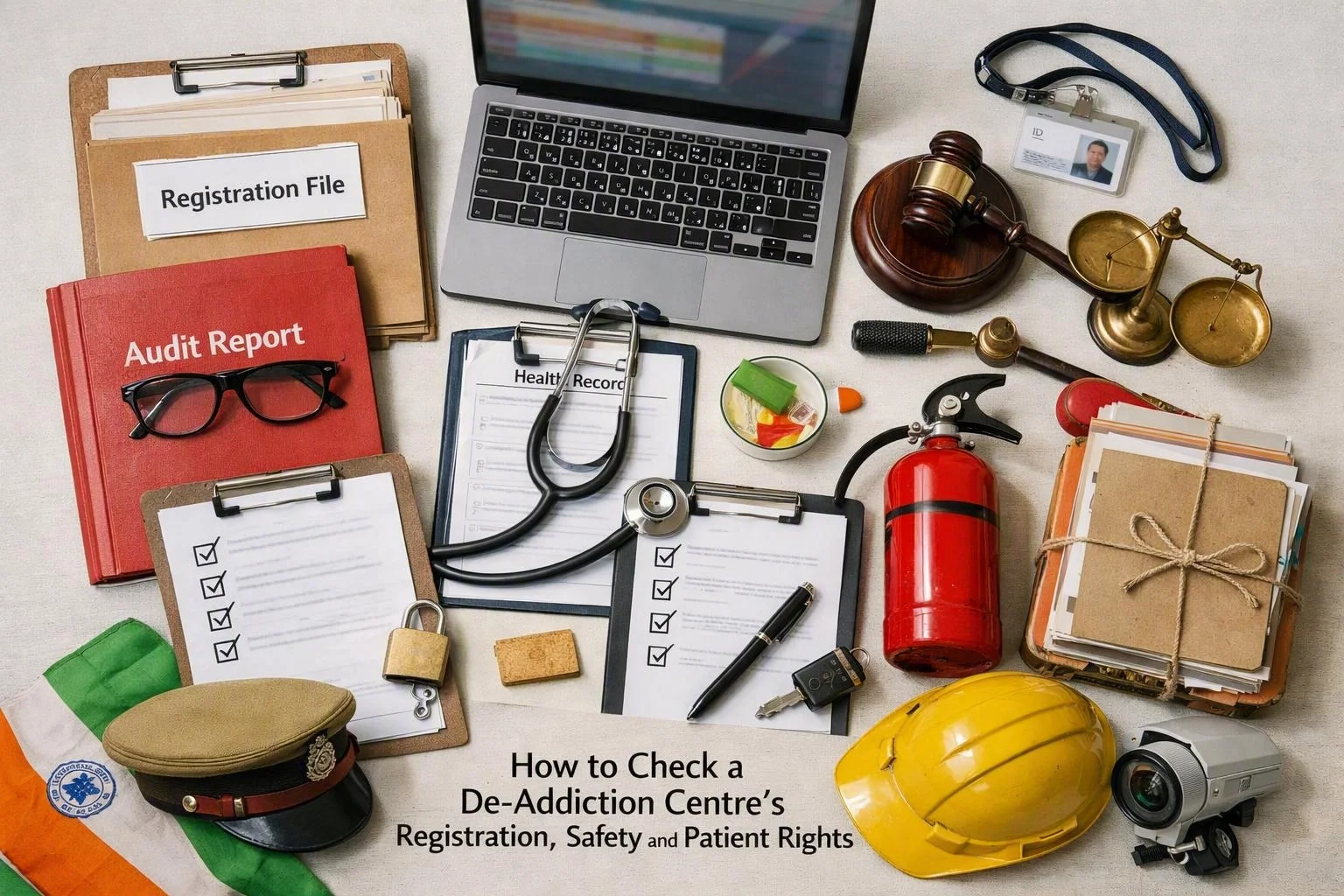
Five Quick Answers About De-Addiction Centre Compliance
| Question | Short answer |
|---|---|
| What should a de-addiction centre show? | It should show its legal identity, required registration, responsible clinician, safety steps and written patient-rights information. |
| How is registration checked? | Ask for the registration certificate, renewal details and verifying authority. Confirm the details independently where possible. |
| What patient rights matter? | Patients should receive dignity, privacy, clear information, informed consent, fair care and a safe complaints process. |
| What safety procedures are essential? | The facility needs safe rooms, fire arrangements, secure medicine storage, trained staff and an emergency referral plan. |
| How should family verification work? | Inspect the premises, compare documents with the service, speak with the clinician and keep copies of forms and receipts. |
A centre that avoids basic questions needs careful review before admission. Legal registration matters, but it doesn't prove good treatment or respectful care.
How Are De-Addiction Centres Regulated in India, and Does the Mental Healthcare Act Apply?
De-addiction centres follow several legal and operating requirements. There isn't one universal licence for every centre. Depending on its services, the Mental Healthcare Act, 2017, clinical-establishment rules, medicine controls, fire rules and local permissions may apply. Ask which rules cover the centre and request proof.
The Mental Healthcare Act, 2017 may apply when a service provides mental healthcare or treats a co-occurring mental illness. It may also cover other services listed under the Act. A facility’s registration needs depend on its services, structure and state process. Don't accept a simple “registered” claim. Ask which authority issued the document and what it covers.
In Odisha, ask the centre to explain the process involving the State Mental Health Authority. Also ask about other state or local bodies that oversee clinical and health facilities. Request registration documents, renewal details, ownership information and inspection records. If the centre can't name the verifying authority, pause admission and seek independent advice.
Clinical establishment registration may be required for a healthcare facility. It doesn't prove excellent clinical care. Medicine controls matter too. Ask who prescribes medicines, how staff keep the medicine register and how they store and record medicines.
Fire and building safety need a practical check. Look for clear exits, usable fire equipment and safe electrical systems. Check the occupancy level and evacuation plan. In Bhubaneswar, Odisha, the centre should also name its referral hospital and explain ambulance arrangements.
Ask how heavy rain and monsoon delays could affect medicine supplies and emergency transport. Discuss admissions, family visits and continued care during disruptions. Consent forms, treatment limits and complaint details should use language the patient and family understand.
A residential rehabilitation programme has different risks from medical detoxification or outpatient addiction treatment. The service description should match the building, staff and documents shown to the family.
What Families Should Verify Before Admission to a Rehabilitation Centre?
Families should verify the centre’s legal identity, registration, staff, consent process, treatment plan, medicines, emergency referrals, fees and discharge policy before admission. Compare the documents with the premises and written agreement. Speak with the responsible clinician and keep copies of every form and receipt.
For a local provider such as Steps Deaddiction & Mental Health Services, families should treat these as verification questions. They shouldn't assume compliance. At Bhubaneswar Rehabilation Centre in Bhubaneswar, compare the admission agreement with the premises during your visit.
Most admissions use several key documents. The number commonly ranges from 6 to 10, depending on the service. These may include consent, assessment, treatment terms, medicine records, emergency contacts, fees, belongings and discharge plans. This range is only an example, not a legal rule.
What Patient Rights Apply in a Rehabilitation Centre?
Patient rights include dignity, privacy, clear information, informed consent, fair care, access to records where allowed, communication and a safe complaints process. Rehabilitation centres should explain restrictions, medicines, treatment risks, discharge terms and emergencies. Coercion, abuse, humiliation and unexplained confinement are serious warning signs.
Informed consent should mean more than signing a form. The patient should understand the proposed care, likely benefits, key risks, alternatives and result of refusing treatment. Family support can help, but family consent doesn't remove the patient’s rights or replace legal safeguards.
Privacy covers conversations, records, medicine details and personal history. Staff shouldn't discuss patients in public areas or share details without a proper reason. Patients should receive care without discrimination based on sex, disability, background, language, diagnosis or ability to pay.
Staff should support the patient’s own decisions whenever possible. If movement is limited, the centre must explain the reason, time period, review process and safeguards. Locked rooms, restraint, isolation, threats or forced medication need close review. They may signal a serious safeguarding problem.
Family contact must follow consent and safety rules. Patients should still have a clear way to contact support. The complaints process should name a responsible person, response method and escalation route. Written information should be available in a language the patient understands.
Our team believes families should ask who we are and how we handle complaints, emergencies and safeguarding concerns. Odisha Rehabilation Centre should meet the same clear standards as every other mental-health service provider.
How Can I Check Whether a De-Addiction Centre Is Legitimate?
A legitimate centre Can explain its legal status and show required permissions. It can identify responsible clinicians and describe medicine storage, emergency care, fees and consent forms. Families should inspect the facility and confirm documents independently where possible. Refusal, secrecy, guaranteed or abusive restrictions should stop admission.
Documents should match what families see. A clean brochure can't replace safe rooms, trained staff, medicine controls, fire safety and emergency referrals. The related guide “What Happens in Drug and Alcohol Rehabilitation? A Step-by-Step Guide” can help families prepare treatment questions.
Ask how the programme changes after assessment. A responsible addiction treatment centre can explain when medical detoxification is needed. It should also explain withdrawal monitoring and follow-up care.
De-Addiction Centre Compliance FAQs for Families
Families can assess compliance by asking about legal status, consent, clinical safety, patient rights and local accountability. Answers should be clear, written and consistent with what families see. These checks can reveal missing safeguards without treating one certificate as proof of quality.
Use the questions below during a visit. Record the name and role of each person who answers. Then compare the answers with documents and actual practice.
Legal Status, Registration and Accountability Questions
Admission, Treatment and Patient-Rights Questions
For families comparing programmes, “Rehabilitation Centre Cost and Programme Duration: What Families Should Ask” can guide discussions about written terms. Cost and length don't prove quality.
Questions About Rehabilitation Center
How Are De-Addiction Centres Regulated in India?
They may follow rules for mental healthcare, clinical establishments, medicines, fire safety, buildings and local operations. The correct process depends on the services provided. Families should ask the centre to name each authority and show supporting documents.
Does a De-Addiction Centre Need Registration Under the Mental Healthcare Act?
There isn't one answer for every facility. The Mental Healthcare Act, 2017 may apply when a service provides mental healthcare or falls under the Act. Ask which rules apply, which authority oversees the service and what documents support the answer.
What Should Families Verify Before Admission?
Verify the legal entity, registration, trained staff, consent forms, treatment plan, medical detoxification, medicine controls, emergency referral, fees, complaints process and discharge policy. Inspect the premises and keep copies of all documents and receipts.
What Patient Rights Apply in a Rehabilitation Centre?
Patients should receive dignity, privacy, clear information, informed consent, fair care, communication and a safe complaints process. Staff should explain medicines, restrictions, risks, discharge terms and emergencies. Abuse, humiliation and unexplained confinement are serious warning signs.
How Can I Check Whether a Rehab Centre Is Legitimate?
Request permissions, check the legal identity, inspect the premises and confirm staff credentials. Ask about medicine storage, emergency referrals and complaints. Confirm documents independently where possible. Refusal, secrecy, guaranteed, missing receipts or abusive restrictions should stop admission.
What Documents Should a De-Addiction Centre Show Before Admission?
Ask for legal entity details, registration, renewal information, clinician details, consent forms, treatment terms, fees, emergency plans, complaint procedures and discharge policies. The document list varies by service. Ask which authority issued each document.
Can a Rehabilitation Centre Admit Someone Without Informed Consent?
Admission and treatment should follow the law, consent rules and required safeguards. Family wishes alone don't remove patient rights. Ask how the centre handles refusal, supported decisions, emergencies and restrictions. Seek independent legal or clinical advice when consent is disputed.
What Safety Measures Should a De-Addiction Centre Have?
It should have safe rooms, suitable occupancy, clear exits, fire-safety arrangements, trained staff, safeguarding steps, medicine controls and an emergency plan. It should name a referral hospital and explain ambulance arrangements for severe withdrawal, psychiatric emergencies and medical problems.
How Should Medicines Be Stored and Administered in a Rehab Centre?
Staff should prescribe medicines, store them securely, limit access and record each dose. Ask about temperature control, controlled medicines, missed doses, side effects, disposal and the medicine register. Patients should understand important medicines and their risks.
What Should Families Do if a Rehabilitation Centre Violates Patient Rights?
Record dates, names, statements, injuries, restrictions, medicines and messages. Use the centre’s complaints process if it is safe. Then seek help from the relevant health, mental-health, safeguarding or emergency authority. In immediate danger, seek emergency medical and protective help first.
What Qualifications Should Staff at a De-Addiction Centre Have?
Staff qualifications should match their duties. Ask who handles medical checks, psychiatric reviews, withdrawal monitoring, nursing, counselling and overnight supervision. A qualified psychiatrist may be needed for some mental-health assessments.
What Should Be Included in a De-Addiction Centre Discharge Plan?
A discharge plan should state progress, medicines, follow-up visits, relapse prevention steps, warning signs, family guidance, emergency contacts, referrals and continuing care. It should explain records, belongings, transport, consent and steps to take if symptoms worsen.
Verification is a safety step, not a formality. Families in Bhubaneswar, Odisha should ask questions before admission and inspect the healthcare facility. They should confirm emergency referrals and keep written records. If answers remain unclear, delay admission until the concerns are resolved.
Author: Prasanta Dash
Contact our team for general admission and verification questions