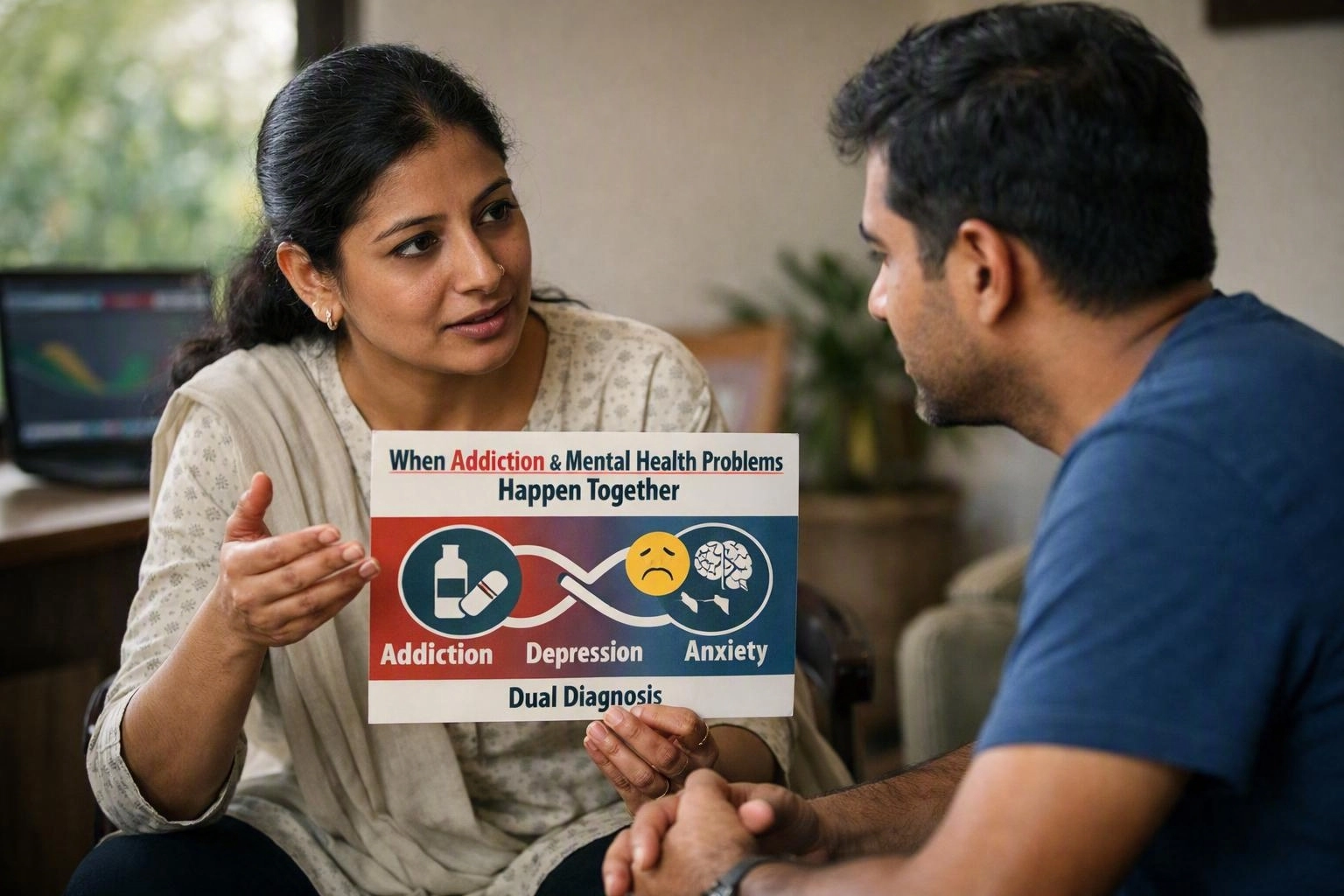
When Addiction and Mental Health Problems Happen Together
Dual diagnosis rehab treats addiction with depression or anxiety at the same time. Care may include assessment, supervised withdrawal, therapy, medication reviews and relapse planning. Depression can raise the risk of substance use, while drugs and alcohol can worsen anxiety or depression. A qualified rehabilitation centre can coordinate care, create a safety plan and involve family when suitable. Anyone facing suicidal thoughts, severe withdrawal, overdose symptoms or immediate danger should seek emergency medical help now.
Contact Us TodayWritten by Prasanta Dash, Founder & Managing Trustee · 10 years of local experience
Written by Prasanta Dash
What Is Dual Diagnosis Addiction, Depression and Anxiety Rehab?
Dual diagnosis rehabilitation treats substance use with depression, anxiety or another mental health condition. A rehabilitation centre checks both problems and builds one recovery plan. Untreated symptoms in either area can raise the risk of relapse.
Dual diagnosis means a substance use disorder occurs with a mental health disorder. This may include major depression, an anxiety disorder or a trauma-related condition. The mental health problem may start before substance use, during heavy use or after withdrawal ends.
Assessment covers alcohol, prescription medicines and illegal drugs. It also reviews mood, sleep, panic, trauma, physical health and family history. Clinicians check past treatment, current medicines and the person’s home setting. This helps separate depression from short-term low mood caused by substances.
Integrated treatment connects addiction, psychiatric and psychological care. These services work from one plan instead of operating separately. Someone with alcohol use disorder and depression may need withdrawal care, therapy and craving support. Someone with opioid use disorder and anxiety may need medical care, anxiety treatment and a medication review.
The goal isn’t to label someone or blame one diagnosis. It’s to understand safety, daily life and patterns over time. An initial assessment may take one to three appointments. Timing depends on urgency, substance use, available records and medical needs.
Our team can explain inpatient, residential, intensive outpatient and community-based rehabilitation care. The right setting depends on withdrawal risk, housing, mental health symptoms and outside support.
How Addiction and Mental Health Conditions Affect Each Other?
Addiction and mental health problems can strengthen each other. Stress, self-medication, brain changes and withdrawal may all play a part. Alcohol or drugs may bring short relief, but they often harm sleep, mood and anxiety later. Depression and anxiety can also increase cravings and make recovery harder.
Self-medication may begin when someone uses alcohol, sedatives, opioids or stimulants to manage distress. The relief usually doesn’t last. Over time, tolerance may develop, so the person uses more or uses more often. Dependence, money problems, strained relationships and shame may follow.
Repeated use changes the brain’s reward system. Meaningful activities may feel less rewarding, while reminders of use can trigger strong urges. Recovery is still possible. Treatment must address habits, stress, cravings and the feelings linked with substance use.
Withdrawal can increase anxiety, irritability, low mood, poor sleep and physical distress. Some forms are dangerous, especially after heavy alcohol or sedative use. Medical observation and medicines may be needed. Stopping suddenly without help can be unsafe.
Trauma can make recovery more difficult. A person may use substances to avoid painful memories. Substance use can then make trauma therapy harder and less safe. Clinicians may first support sleep, safety, substance use and daily routines before deeper trauma work.
These problems can create a relapse cycle. Distress leads to use, use brings short relief, and its effects create more distress. Breaking this cycle takes coping skills, trusted support, medical care and treatment for mental health symptoms.
Our team can map this cycle with each person. The map may show risky people, places, thoughts, times or body sensations. A clear plan can offer safer choices before cravings become an emergency.
Signs and Symptoms of Co-Occurring Addiction and Mental Health Problems
Signs may include low mood, constant worry, rising substance use, withdrawal, cravings and trouble with daily tasks. These symptoms can overlap, so professional assessment matters. Suicidal thoughts, overdose symptoms, psychosis and severe withdrawal need emergency support.
Symptoms must be viewed in context. Intoxication and withdrawal can look like depression or anxiety. An underlying condition may also stay hidden during heavy use. Clinicians may ask when symptoms began and how long they last without substances.
Immediate danger changes the plan. Call local emergency services or attend an emergency department for overdose signs, breathing problems, chest pain, seizures, severe confusion, psychosis or suicidal intent. Don’t leave someone alone during an immediate safety risk.
Can Anxiety Cause Drug Addiction, and What Are the Common Causes?
Anxiety can raise addiction risk when someone repeatedly uses substances to escape fear or tension. It doesn’t mean anxiety will always cause addiction. Risk also depends on trauma, genetics, access, social setting and substance effects. Safe anxiety care can reduce reliance on drugs or alcohol.
Other factors include chronic pain, poor sleep, depression, isolation and limited coping skills. Some people use stimulants for low energy, then develop more panic or insomnia. Both the substance and the person’s biology matter.
An assessment should examine the full pattern without blaming anxiety alone. It may review the substance, dose, frequency, route, mixing, withdrawal and trauma history. This supports safer anxiety care while the addiction is treated.
For medicine concerns, Prescription Drug Dependence: Signs It Is Time to Seek Help may help families spot warning signs. It shouldn’t replace clinical advice, especially after medicines are mixed with alcohol or sedatives.
Can Rehab Treat Depression and Addiction Together?
Rehab can treat depression and addiction together through integrated dual diagnosis care. Treatment may include withdrawal monitoring, psychiatric checks, therapy, medication reviews, coping skills and relapse planning. The order depends on safety, substance type, severity and medical needs.
Assessment reviews substance use, depression, anxiety, physical health, medicines and past treatment. The clinician also checks suicidal thoughts, overdose history, psychosis, violence risk and daily safety. These findings help set the right level of care.
| Treatment area | Possible purpose | How it may be adapted |
|---|---|---|
| Clinical assessment | Clarify diagnoses, risks and priorities | Reviews symptoms during use, withdrawal and sobriety |
| Detoxification | Support safer substance cessation | Uses medical supervision when withdrawal may be dangerous |
| Psychotherapy | Build coping skills and emotional control | May use cognitive behavioural therapy for thoughts and cravings |
| Psychiatric care | Assess mood, anxiety, sleep and safety | Includes evaluation and review of care choices |
| Medication management | Treat symptoms and reduce harm | Checks interactions, adherence, misuse and recovery changes |
| Relapse prevention | Prepare for cravings, triggers and mood changes | Links warning signs with clear actions and support |
Withdrawal monitoring is vital for some people. Alcohol, benzodiazepines and other substances can cause serious problems after sudden stopping. Clinicians review the substance, amount, use length, past withdrawal and medical conditions. They also consider pregnancy, mixed substances and available supervision.
Depression may improve with better sleep, nutrition, safety and less substance exposure. Clinicians shouldn’t assume every symptom comes from substance use. Ongoing or severe symptoms may need psychiatric care. Medication choices require checks for side effects, interactions, misuse and suicidal thinking.
Integrated care can help with alcohol use disorder and depression, opioid use disorder and anxiety, or stimulant-related anxiety. Each combination has different risks. Treatment should fit the person and shouldn’t promise one fixed timetable.
What Integrated Treatment May Include?
Integrated treatment may combine several connected services. The order and intensity depend on substance use, symptoms, triggers, safety and home support.
- Individual therapy: Explore substance use, depression, anxiety, trauma, cravings and practical coping skills.
- Group therapy: Build connection, practise communication and learn from others in recovery.
- Motivational interviewing: Explore change without pressure, shame or false promises.
- Family therapy or planned family involvement can improve communication, boundaries, safety and support when suitable.
- Crisis and safety planning identifies warning signs, trusted contacts, safer spaces and emergency steps.
- Aftercare may include counselling, peer support, medicine follow-up, primary care and planned reviews.
Family involvement should respect consent, privacy and safety. Some people need family education, while others need firm boundaries or protection from an unsafe home. The care team should explain what information can be shared.
Continuing support matters because recovery doesn’t end on one discharge date. Our team can connect treatment goals with work, study, housing, relationships and health care. The plan should explain when to call the team and when to use emergency services.
How to Choose Mental Health and Addiction Treatment?
Choose mental health and addiction treatment when substance use, depression or anxiety affects safety, health, relationships or daily life. A suitable rehabilitation centre should assess both conditions, explain its services, manage withdrawal risks and offer follow-up care.
Ask if the service screens for depression, anxiety, substance use and immediate safety risks. The assessment should cover suicidal thoughts, overdose risk, psychosis, withdrawal history, physical illness and current medicines.
Ask how the service decides if medical supervision is needed. Staff should review the substance, amount, use pattern, past seizures, severe withdrawal, pregnancy and medical conditions. They should explain when hospital or emergency care is needed.
Look for a care plan that connects addiction, depression and anxiety treatment. It should list goals, therapy, medication reviews, family support, crisis steps and progress measures. Staff should update the plan as symptoms change.
Confidentiality also matters. Ask who can see records and how family information is handled. Staff should explain what happens during an immediate safety concern.
Family support can help when the person agrees and the relationship is safe. Relatives may learn how to respond to cravings, warning signs and medicine concerns. If family support isn’t suitable, clinicians can help build another network.
Discuss ongoing care before treatment begins. Ask who provides follow-up, how medicines are reviewed and what happens after a lapse or relapse. The service should have a clear route for urgent help.
A person considering care in Odisha might speak with a Mental Helath Centre Bhubaneswar in Bhubaneswar about its assessment process and clinical scope. People may also call it the mental health centre or de-addiction service. Questions about safety, privacy and follow-up apply to every provider.
Compare the treatment setting with the person’s real needs. A rehabilitation center may suit someone needing structured support. Outpatient care may suit someone medically stable with a safe home. No provider should promise one result for everyone.
Prevention, Relapse Planning and When to Seek Help
Relapse planning should cover both substance use and mental health triggers. Helpful steps include early assessment, regular treatment, prescribed medicines, sleep, routines, trigger planning and trusted support. Seek urgent help for overdose, severe withdrawal, psychosis or suicidal intent.
Relapse prevention addresses cravings, triggers and mental health symptoms over time. A useful plan separates a passing urge from a crisis. It lists warning signs and clear actions, such as calling a counsellor or leaving a risky setting.
After a lapse, act quickly and without shame. Check for overdose or withdrawal, reconnect with treatment and update the plan. A lapse doesn’t prove care has failed. It may show that more support is needed.
Seek emergency care for slow or stopped breathing, blue lips, unresponsiveness, seizures, severe confusion, chest pain, hallucinations, psychosis or suicidal intent. Don’t manage severe withdrawal alone. Mixed or unknown substances also need urgent attention.
The guide Do You Need Detox Before Rehab? Understanding Withdrawal Safety explains why withdrawal planning may come first. Personal medical advice remains essential. Risk depends on the substance, dose, health history and past complications.
Our team can adapt family support, relapse planning and continuing care to each person’s needs. The plan should say who will help, what happens at night, where medicines are stored and who to call if safety worsens.
Questions About Rehabilitation Center
What Is Dual Diagnosis Addiction Depression Anxiety Rehab?
It is coordinated care for substance use alongside depression, anxiety or another mental health condition. Assessment, withdrawal care, therapy, psychiatric review, medication checks, safety planning and relapse prevention form one individualised plan.
Can Rehab Treat Depression and Addiction Together?
Yes, integrated dual diagnosis care can treat both conditions together. Care may include supervised detox, psychotherapy, cognitive behavioural therapy, psychiatric care, medicine management and follow-up. The order depends on safety, withdrawal risk and changing symptoms.
What Is Addiction and Mental Health Treatment?
Addiction and mental health treatment addresses substance use and emotional or psychiatric symptoms together. It may include medical care, counselling, medication reviews, family support, crisis planning and relapse prevention.
Can Anxiety Cause Drug Addiction?
Anxiety can raise addiction risk when someone uses drugs or alcohol for relief, but it doesn’t always cause addiction. Risk also depends on genetics, trauma, social setting, access, substance effects and medicine misuse. Safe anxiety care can reduce self-medication.
Should I Seek Mental Health and Addiction Treatment?
Consider an assessment if substance use, depression or anxiety affects safety, health, relationships or daily life. Seek emergency help for overdose symptoms, severe withdrawal, psychosis, suicidal intent or immediate danger.
If you’re unsure about the right level of care, speak with a qualified clinician. Share information about symptoms, substance use, withdrawal and immediate safety. We can help identify the next safe step.
Discuss treatment optionsRelated Resources
Inpatient or Outpatient Rehab: Which Level of Care Is Better?
inpatient vs outpatient rehab Bhubaneswar
Compared ToDetox or Full Rehab: Understanding Which Addiction Treatment You Need
detox vs rehab Bhubaneswar
How to HireHow to Choose an Alcohol Rehabilitation Centre
alcohol rehabilitation centre Bhubaneswar
How to HireHow to Choose Rehab When Addiction and Mental Health Overlap
dual diagnosis rehab Bhubaneswar mental health addiction