Alcohol Rehabilitation and De-Addiction Treatment Explained
Alcohol rehabilitation and de-addiction treatment help people stop drinking safely. They also address dependence through therapy and build skills for long-term recovery. Medical detox manages withdrawal risk. Residential or outpatient care adds structure, while counselling, family support, peer groups, and relapse planning help maintain progress. At Steps Deaddiction & Mental Health Services, we help people understand treatment choices and plan care around safety, health needs, and recovery goals.
Contact Us TodayWritten by Prasanta Dash, Founder & Managing Trustee · 10 years of local experience.
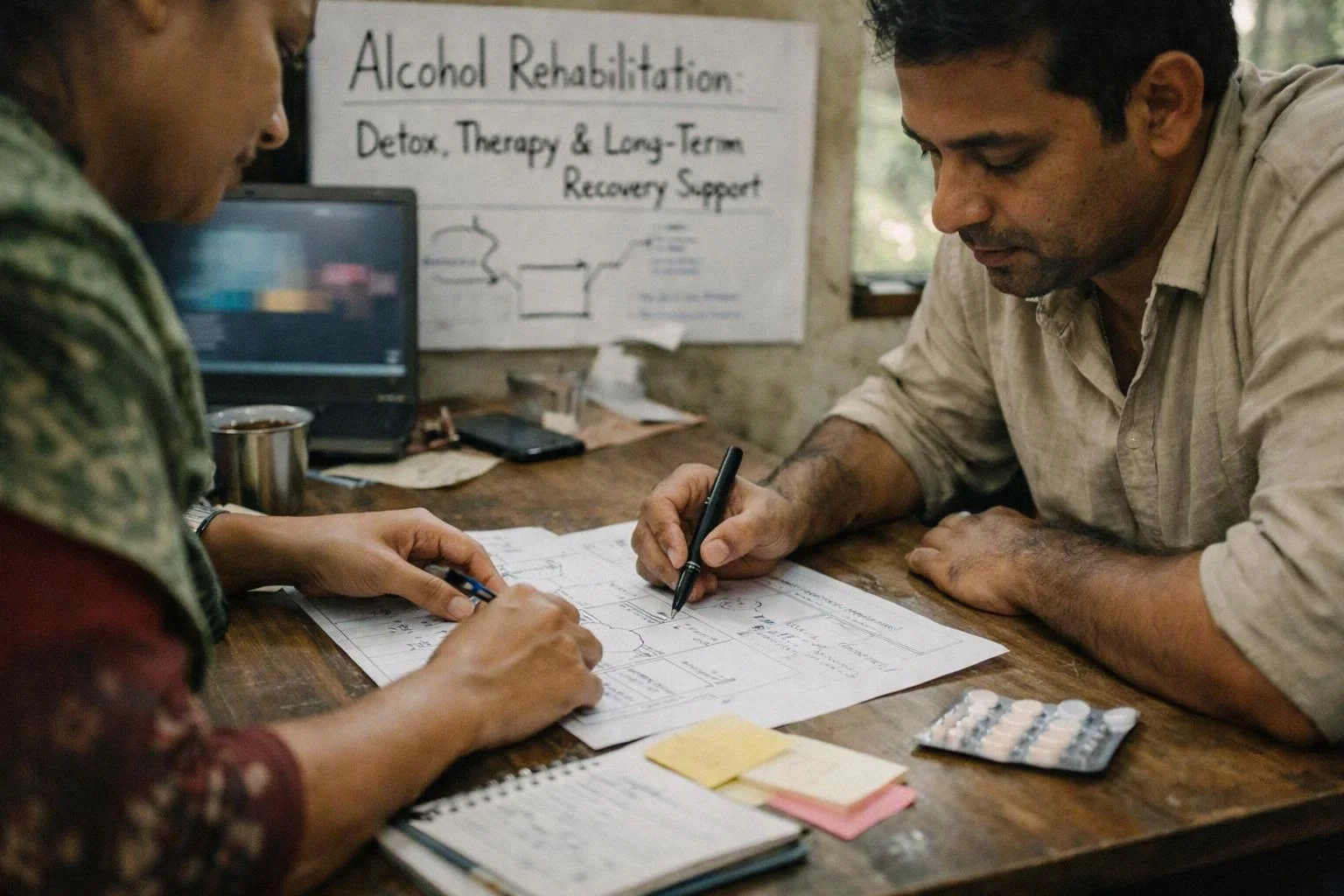
Alcohol rehabilitation and de-addiction treatment offer simple help with withdrawal, addiction therapy, behaviour change, and long-term recovery. The right plan isn't the same for everyone. An early assessment should review alcohol use disorder, physical health, mental health, home support, work, caregiving duties, and past attempts to stop drinking.
People may search for alcohol rehab, alcohol addiction treatment, or de-addiction treatment. These terms can describe one connected care pathway. A rehabilitation center may offer medical alcohol detox, residential alcohol rehabilitation, outpatient alcohol treatment, counselling, group work, and aftercare planning.
Our team can explain what an Alcohol Rehab Centre may provide and what questions to ask. We can also discuss when supervised care is safer than stopping alone. This guide is authored by Prasanta Dash and isn't a replacement for an individual clinical assessment.
What Happens During Alcohol Rehabilitation?
Alcohol rehabilitation starts with an assessment of drinking patterns, health, withdrawal risk, and recovery goals. A treatment plan may include supervised detox, counselling, behavioural therapy, family support, peer groups, suitable medication, and aftercare planning. The setting and level of care depend on each person's needs.
The first step is a clinical assessment. A qualified professional may ask how often and how much someone drinks. They may ask when the person last drank and whether withdrawal has happened before. The team also checks medicines, health conditions, sleep, nutrition, mood, anxiety, trauma, and possible dual diagnosis.
Withdrawal care is based on risk, not preference alone. Someone with past seizures, severe withdrawal, heavy drinking, major health concerns, or little home support may need supervised care. Emergency steps should be clear before treatment starts. These steps should include urgent medical help if symptoms become severe.
Addiction therapy looks at why drinking continues. Individual counselling can explore habits, feelings, relationships, and practical goals. Cognitive behavioural therapy helps people notice thoughts, triggers, and drinking habits. Motivational interviewing supports open discussion when someone feels unsure about change. Group therapy can reduce isolation and build communication skills.
Family counselling can improve communication, boundaries, safety planning, and shared recovery goals. Family involvement should be voluntary and based on consent. Plans can support first-time treatment, repeated relapse, family-supported recovery, or people managing work and caregiving.
Relapse prevention turns treatment lessons into daily steps. A recovery plan may list risky situations, warning signs, coping actions, helpful contacts, and steps after a lapse. When comparing care, check privacy, qualified staff, therapy access, discharge planning, and follow-up support.
Alcohol Rehabilitation Types: Compare Care Options
Alcohol rehabilitation can include supervised detox, residential care, outpatient treatment, and aftercare. Higher-intensity care offers more structure and monitoring. Outpatient programmes provide more flexibility at home. The best option depends on withdrawal risk, physical and mental health, home support, work duties, and relapse history.
Cost and effort vary by treatment intensity, staffing, medication needs, length of stay, and follow-up. This table gives a general comparison, not a personal recommendation.
| Type | Key Features | Relative Cost/Effort | Best For |
|---|---|---|---|
| Medical detox | Clinical monitoring, withdrawal assessment, symptom management | Varies; higher clinical effort | People at risk of serious withdrawal |
| Residential rehabilitation | Live-in structure, therapy, peer community, planned routine | Higher | People needing distance from triggers and daily supervision |
| Inpatient treatment | Hospital-level monitoring for complex medical or psychiatric needs | Higher | Acute or medically complex situations |
| Outpatient treatment | Scheduled counselling while living at home | Lower to varies | People who are stable and have reliable support |
| Aftercare support | Follow-up counselling, peer support, monitoring, recovery planning | Lower to varies | People continuing care after a formal programme |
Convenience alone shouldn't decide the treatment type. A clinician should check safety first. The programme should then match the person's goals, responsibilities, privacy needs, and support at home.
Medical Detox for Alcohol Withdrawal
Medical detox is a safety-focused first step for people who may face serious alcohol withdrawal. Withdrawal can begin after regular heavy drinking is reduced or stopped. Symptoms may include shaking, sweating, nausea, anxiety, poor sleep, a fast heartbeat, confusion, or seizures.
Medical supervision lets staff check symptoms, hydration, vital signs, mental state, and changing risks. Medication may be used when clinically suitable. It can reduce withdrawal severity and seizure risk. Qualified professionals must prescribe and monitor these medicines.
Severe withdrawal can cause hallucinations, seizures, deep confusion, or delirium tremens. Delirium tremens is an emergency. It may cause agitation, fever, disorientation, and dangerous changes in consciousness. Anyone with severe symptoms needs urgent medical help. Detox doesn't treat the causes of dependence, so it should lead into therapy and continuing care.
Residential and Inpatient Alcohol Rehabilitation
Residential treatment offers a live-in setting with a planned routine. Inpatient care usually provides hospital-level treatment for serious medical or psychiatric needs. Both offer regular contact with a clinical team, but they aren't the same service.
Residential care may include individual therapy, group sessions, education, supervised activities, nutrition support, and a therapeutic community. Round-the-clock supervision can help when alcohol is easy to access. It may also help with unsafe relationships, repeated relapse, or limited support at home.
Inpatient treatment may be needed for withdrawal, medical illness, severe depression, psychosis, suicide risk, or another complex condition. It allows a quick clinical response and fewer outside pressures. However, it can separate people from family, work, and daily routines. Good planning should support a safe return home.
Outpatient Alcohol Rehabilitation
An outpatient programme provides planned care while the person lives at home. It may include assessment, individual counselling, group therapy, medication reviews, family sessions, and recovery checks. This approach may suit someone with low withdrawal risk and a reasonably safe home.
Home-based recovery lets people continue work, education, or family duties. It also gives them chances to practise coping skills between appointments. Flexibility can become difficult when alcohol is available, support is weak, or appointments are missed.
Community support can strengthen outpatient treatment. With consent, our team may involve trusted relatives in planning and identify early warning signs. If symptoms worsen or attendance drops. The plan should be reviewed quickly. It shouldn't be treated as a personal failure.
Intensive Outpatient and Day Treatment
An intensive outpatient programme and partial hospitalization provide more support than standard outpatient care. Neither usually requires an overnight stay. Day treatment may include several hours of care on selected days, followed by a return home or to supported accommodation.
These programmes often combine group therapy, individual counselling, health education, medication review, skills practice, and family work. They may suit people who need more routine after detox or residential care. They may not suit someone who needs constant inpatient monitoring.
The main benefit is a balance between clinical structure and daily-life practice. The main limit is that safety still depends partly on home life, transport, attendance, and avoiding alcohol between sessions. The care level should change if withdrawal or mental health risks increase.
Aftercare and Long-Term Recovery Support
Aftercare connects formal treatment with community recovery. Continuing care may include counselling, medication reviews, peer meetings, family support, sober housing referrals, and progress checks. These services can continue after a formal programme ends.
A sober support network may include relatives, trusted friends, therapists, doctors, peer workers, and recovery groups. A recovery community can reduce isolation. Participation should still match the person's beliefs, comfort, privacy, and access.
Follow-up counselling can address cravings, relationship stress, work pressure, sleep, and a return to drinking. A useful plan says whom to contact, what to do after a lapse, and when to seek urgent help. Aftercare doesn't mean treatment failed. It provides ongoing support for a condition that may need long-term care.
Detox Safety, Therapy, Treatment Length and Relapse Prevention
Alcohol detox can be dangerous without medical supervision. Withdrawal may cause seizures, severe confusion, hallucinations, or delirium tremens. Rehab length varies from detox and short-term care to several months of continuing support. Therapy, family involvement, trigger planning, peer support, and aftercare can lower relapse risk.
People entering treatment for the first time may need clear information and reassurance. Someone with repeated relapse may need a closer review of triggers, treatment fit, mental health, medication, and living conditions. Family-supported recovery may involve scheduled meetings. People with work or caregiving duties may need evening appointments or a gradual return to responsibilities.
Our team can discuss these differences without assuming one programme fits everyone. The guide titled “Types of Rehabilitation Programmes, Residential, Outpatient and More” may help readers compare care settings. “Therapies and Treatment Methods Used in Addiction Rehabilitation” explains how psychological and behavioural approaches may support recovery.
If drinking has stopped suddenly after heavy or long-term use, seek professional advice. Don't attempt an unsupervised detox. Severe shaking, seizures, hallucinations, extreme confusion, chest pain, trouble breathing, or loss of consciousness requires urgent emergency care.
Questions About Rehabilitation Center
What Happens in Alcohol Rehabilitation?
Alcohol rehabilitation usually starts with a clinical assessment and withdrawal-risk plan. Depending on need, care may include detox, individual counselling, cognitive behavioural therapy, motivational interviewing, group therapy, family counselling, medication, relapse prevention, discharge planning, and aftercare.
Is Alcohol Detox Dangerous Without Medical Supervision?
Alcohol detox can be dangerous without medical supervision. Withdrawal may cause seizures, hallucinations, severe confusion, or delirium tremens. Risk depends on drinking history, past withdrawal, health conditions, and other factors. A qualified clinician should advise whether supervised detox is needed.
How Long Does Alcohol Rehab Take?
Alcohol rehab has no single timeline. Detox may take several days. Structured residential or outpatient care may continue for weeks, and aftercare may last months or longer. Treatment length depends on withdrawal risk, progress, relapse history, mental health, support, and daily responsibilities.
What Therapies Help with Alcohol Addiction?
Common therapies include cognitive behavioural therapy, motivational interviewing, individual counselling, group therapy, family counselling, coping-skills training, and relapse-prevention work. The best mix depends on the person's goals, mental health, drinking pattern, and readiness for change.
How Can Relapse After Alcohol Rehab Be Prevented?
Relapse prevention includes a written plan, early trigger awareness, follow-up counselling, sober support, family involvement with consent, good sleep, stress care, and quick help after a lapse. Continuing care keeps support in place after formal treatment ends.
If you're comparing treatment options, discuss withdrawal safety, clinical oversight, privacy, therapy access, family participation, discharge planning, and follow-up support with a qualified provider.
Related Resources
Inpatient or Outpatient Rehab, Which Level of Care Is Better?
inpatient vs outpatient rehab Bhubaneswar
Compared ToDetox or Full Rehab, Understanding Which Addiction Treatment You Need
detox vs rehab Bhubaneswar
How to HireHow to Choose an Alcohol Rehabilitation Centre
alcohol rehabilitation centre Bhubaneswar
How It WorksWhat Happens After Rehab? Family Support and Continuing Care
rehab aftercare and family counselling Bhubaneswar