
Do You Need Detox Before Entering Rehab?
Detox isn't needed before every rehab program. However, people dependent on alcohol, opioids, benzodiazepines, or other drugs may need supervised withdrawal first. A rehabilitation center reviews substance use, physical health, mental health, past withdrawal, and overdose risk. The team may suggest detox, residential rehab, outpatient care, or a combined plan. Don't stop heavy alcohol or sedative use suddenly without medical advice. Severe symptoms need emergency help, including seizures, hallucinations, confusion, chest pain, or breathing problems. At Steps Deaddiction & Mental Health Services, we help families understand the safest next step.
Contact Us TodayWritten by Prasanta Dash, Founder & Managing Trustee · 10 years of local experience
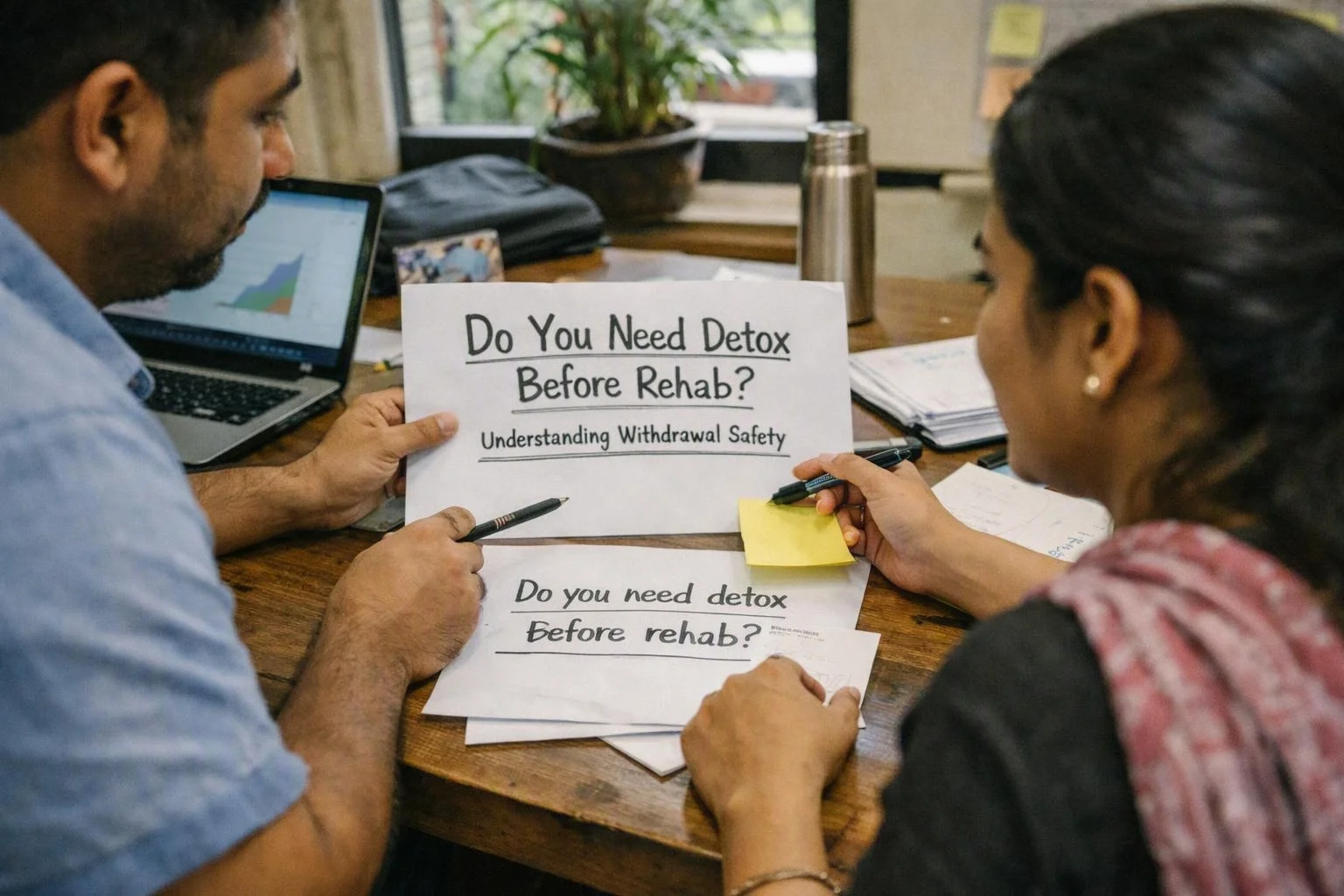
This decision isn't a test of motivation. It's a medical safety decision based on the substance, use pattern, health, and support available. Some people can begin structured treatment without detox. Others need medical detox first or a change in care as symptoms develop.
This guide explains how withdrawal care connects with addiction treatment, counselling, family support, and aftercare. It offers general information and doesn't replace an urgent medical assessment.
Written by Prasanta Dash
Do You Need Detox Before Rehab?
Medical detox is necessary before rehab when withdrawal could become dangerous. It may also be needed when intoxication affects safe treatment or physical dependence is present. Not everyone needs detox first. A rehabilitation center reviews substance type, amount, use length, medical history, and past withdrawal before choosing the safest order of care.
Detox is sometimes needed before rehab, but it isn't automatic. Someone who uses a substance occasionally may start outpatient treatment, counselling, or residential rehab. People with alcohol dependence, opioid dependence, benzodiazepine use, or failed attempts to stop may need monitored care first.
A withdrawal assessment reviews the last use, daily pattern, tolerance, and past symptoms. It also checks for seizures, overdose, pregnancy, prescribed medicines, and multiple substance use. The team should screen for depression, anxiety, trauma symptoms, and psychosis.
Intoxication can affect attention, judgment, consent, and treatment. Clinicians may delay therapy until the person is medically stable. Residential rehab can then offer structure, supervision, and recovery planning. Outpatient treatment may suit people with mild symptoms, a safe home, and dependable support.
A withdrawal-management stay may last several days to about two weeks. The exact time depends on the substance, health, and response to care. Detoxification before rehabilitation is one step, not a cure. Long-term recovery still needs support for cravings, habits, relationships, and relapse prevention.
What Happens During Drug Withdrawal?
Drug withdrawal starts when the brain and body adjust after regular substance use stops. Symptoms vary by drug and may include cravings, anxiety, sweating, nausea, pain, poor sleep, agitation, depression, or confusion. Medical detox manages complications, checks vital signs, supports fluids and sleep, and prepares the person for rehabilitation.
The timeline depends on the drug, dose, frequency, and the person's health. Opioids may cause muscle aches, diarrhoea, vomiting, restlessness, and strong cravings. Opioid withdrawal is often severe but isn't usually life-threatening. Relapse can raise overdose risk after tolerance falls.
Benzodiazepine withdrawal may cause anxiety, poor sleep, tremors, sensory changes, confusion, and seizures. Stopping suddenly can be unsafe. Care should follow a clinician's gradual, personal plan. Stimulant withdrawal often causes exhaustion, extra sleep, low mood, irritability, poor focus, and strong cravings.
Clinical monitoring helps staff spot dehydration, changes in awareness, worsening depression, suicidal thoughts, breathing problems, and other concerns. Staff may check vital signs, review medicines, and support fluids and food. They may also provide treatment based on symptoms. Detox doesn't remove every craving. It creates stability for therapy and planning.
Families should share clear information about substances, timing, and past reactions. Hiding occasional or combined use can make withdrawal care less safe. A guide such as “Prescription Drug Dependence: Signs It Is Time to Seek Help” may help families spot the need for professional support.
Which Alcohol Withdrawal Symptoms Require Medical Help?
Alcohol withdrawal can range from mild anxiety and tremors to dangerous seizures, hallucinations, and delirium. Medical help is needed after heavy or long-term use. It is also needed with past severe withdrawal, confusion, uncontrolled vomiting, seizures, or quickly worsening symptoms. Emergency services should manage severe breathing problems, loss of consciousness, and seizures.
Alcohol withdrawal can change quickly during the first days after the last drink. Don't use another drug or alcohol to control symptoms without medical advice. A clinician can decide between emergency care, monitored alcohol detox, inpatient treatment, and other support.
Delirium tremens is a medical emergency. It can cause severe confusion, agitation, hallucinations, fever, and unstable vital signs. It needs urgent medical care. If someone has a seizure, protect them from injury and don't restrain them. Don't put anything in their mouth, and call emergency services.
Can I Stop Drinking Suddenly?
People with alcohol dependence shouldn't assume sudden stopping is safe. Physical dependence can make abrupt stopping dangerous. It may cause a withdrawal seizure, severe confusion, or delirium tremens. Risk rises after frequent, heavy, or long-term drinking. Past severe withdrawal also raises the risk.
A mild past episode doesn't guarantee a mild next episode. Withdrawal can change with age, illness, poor sleep, poor nutrition, pregnancy, medicines, and repeated episodes. Speak with a medical professional before stopping. This is especially important when alcohol use affects daily life or past attempts to cut down have failed.
Don't prescribe sedatives for yourself or mix alcohol with medicines. Don't stay alone during risky withdrawal. A medical advice call can lead to a withdrawal check, a crisis plan, and a safe move into counselling or structured care.
What Increases Withdrawal Risk, and How Can It Be Prevented?
Withdrawal risk factors include heavy or long-term use, past seizures or delirium, repeated detox stays, multiple substance use, pregnancy, serious illness, and limited support. Prevention starts with honest information and a clinical check. It may include a supervised plan, medicine review, monitoring, fluids, food, and a direct move into rehabilitation.
Risk isn't based on one symptom. The treatment team looks at physical dependence, mental health, housing, emergency access, and sedating medicines. Tell the team about these issues during admission.
Prevention reduces avoidable danger while keeping treatment connected. It doesn't mean managing serious withdrawal alone.
Families can record the last known use and bring medicine information. They can watch for confusion or seizures and follow the crisis plan. Mental health conditions should be treated with substance use problems. “When Addiction and Mental Health Problems Happen Together” is a useful discussion point for a coordinated assessment.
How Do Detox and Rehab Work Together?
Detox and rehab serve different purposes. Detox steadies the body and manages early withdrawal. Rehabilitation works on cravings, triggers, behaviour, relationships, mental health, and relapse prevention. A safe plan connects both stages. Some people start rehab right away, while others need monitored detox first.
Detoxification may happen in a medical setting. Inpatient rehabilitation then provides structured living after the immediate risk falls. Outpatient treatment may suit medically stable people with a safe home. Counselling, therapy, peer support, medication-assisted treatment when appropriate, and family work can be combined.
| Stage | Purpose | Typical support |
|---|---|---|
| Assessment | Identifies withdrawal danger, medical needs, mental health concerns, and the appropriate level of care | Clinical interview, physical checks, substance-use history, safety planning |
| Medical detox | Manages acute withdrawal and reduces preventable complications | Vital-sign monitoring, symptom support, medication review, hydration and nutrition |
| Rehabilitation | Builds recovery skills and treats substance-use patterns | Counselling, behavioral therapy, peer support, family work, coping plans |
| Aftercare | Maintains progress after structured treatment ends | Follow-up appointments, relapse-prevention planning, support groups, recovery routines |
Continuity matters after detox. Tolerance may fall, while emotional distress and cravings may rise. Medication-assisted treatment may support some opioid or alcohol recovery plans. A clinician must review each medicine decision. Aftercare should start before discharge. It should include routines, appointments, family support, and a plan for lapses.
How Should You Choose the Safest Next Step?
The safest next step is a professional assessment, not an unsupervised decision to stop using. Ask if the service can check withdrawal risk, arrange medical detox, address mental health concerns, explain inpatient and outpatient choices, and provide an emergency plan.
A clear screening process separates routine admission from cases needing supervised detox or emergency care. Ask what happens if symptoms worsen and who monitors medicines. Also ask how family members can help and when counselling begins. These answers show whether withdrawal care connects with long-term recovery.
People seeking De addiction in bbsr in Bhubaneswar may discuss alcohol dependence, drug withdrawal, polysubstance use, and mental health needs during an initial assessment. Families may also refer to a Drug rehab centre in Bhubaneswar when comparing inpatient and outpatient treatment.
Our team can explain options in plain language and gather key history. We can also identify when another medical service or emergency department is more suitable. Detox isn't the whole solution. Care should continue through stabilization, counselling, structured rehabilitation, family support, relapse prevention, and aftercare.
To discuss a safe assessment and possible treatment pathway, contact the care team.
Questions About Rehabilitation Center
Is Detox Necessary Before Rehab?
Not always. Detox is needed when withdrawal may be dangerous, intoxication prevents safe participation, or physical dependence is present. A professional assessment should review the substance, amount, duration, medical history, past withdrawal, mental health, and overdose risk. The team can then choose detox, inpatient treatment, or outpatient care.
Do You Need Detox Before Rehab?
You may need detox before rehab if regular alcohol, opioid, benzodiazepine, or other drug use could cause serious withdrawal. Some people can begin rehabilitation without separate detox. The safest answer comes from a withdrawal and health assessment.
What Are Alcohol Withdrawal Symptoms and When Should You Seek Medical Help?
Symptoms may include anxiety, tremors, sweating, nausea, vomiting, poor sleep, agitation, hallucinations, confusion, and seizures. Seek medical help after heavy or long-term use, past severe withdrawal, repeated vomiting, hallucinations, disorientation, or worsening symptoms. Call emergency services for seizures, collapse, breathing trouble, or loss of consciousness.
Can I Stop Drinking Suddenly?
If alcohol dependence may be present, don't stop suddenly without medical advice. Abrupt stopping can cause a withdrawal seizure or delirium tremens. A clinician can assess the risk and suggest monitored withdrawal, emergency care, or another safe plan.
What Happens During Drug Withdrawal?
The brain and body adjust when regular substance use stops. Symptoms may include cravings, pain, nausea, sweating, anxiety, poor sleep, depression, agitation, or confusion. Clinical monitoring can support fluids, vital signs, medicine review, and a safe move into rehabilitation.
Related Resources
Inpatient or Outpatient Rehab: Which Level of Care Is Better?
inpatient vs outpatient rehab Bhubaneswar
Compared ToDetox or Full Rehab: Understanding Which Addiction Treatment You Need
detox vs rehab Bhubaneswar
How to HireHow to Choose an Alcohol Rehabilitation Centre
alcohol rehabilitation centre Bhubaneswar
How to HireHow to Choose a Drug Rehabilitation Centre
drug rehabilitation centre Bhubaneswar