How to Support Someone With Addiction Without Enabling
Families can support someone with addiction without enabling them. Offer empathy, set firm boundaries, avoid funding harmful behaviour, and encourage professional treatment. Enabling removes consequences, while healthy support protects safety and dignity. Discuss expectations when the person is sober, and follow through consistently. Don't rescue them from every crisis. Seek help from an addiction counselor or rehabilitation center. Call emergency services for overdose symptoms, severe withdrawal, suicidal behaviour, violence, or immediate danger.
Contact Us TodayWritten by Prasanta Dash, Founder & Managing Trustee · 10 years of local experience
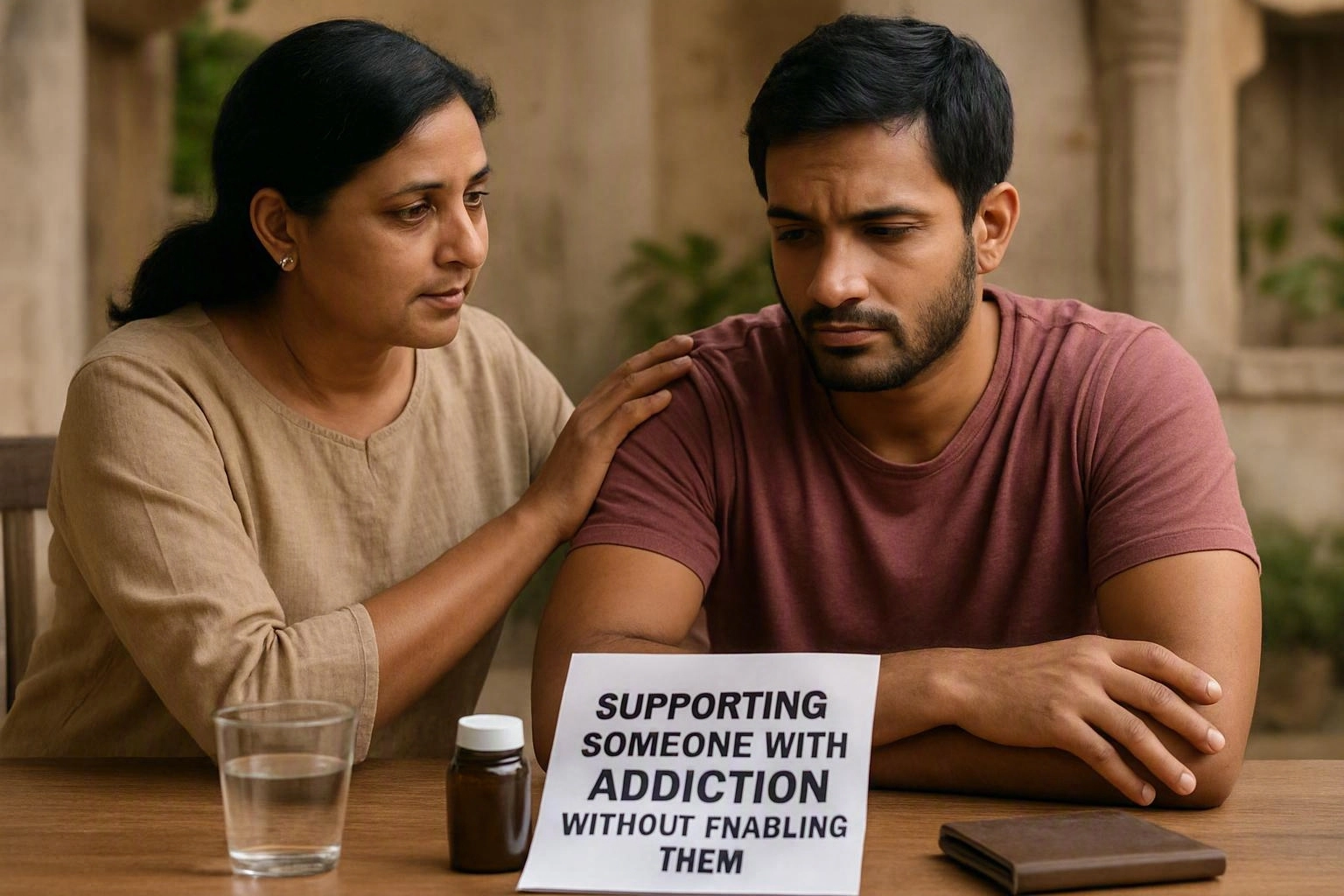
Supporting a loved one can feel confusing. Fear, guilt, and hope often shape each decision. Author Prasanta Dash offers this guide for families. It covers respectful communication, practical limits, and safety planning during treatment decisions.
How Families Can Help Without Enabling Addiction?
Family support helps recovery when it combines care with accountability. Listen without judgment, set clear boundaries, and avoid giving money or making excuses. Help the person connect with addiction treatment. Enabling shields substance use from consequences. Support protects the relationship and points toward professional help.
Learn about substance use disorder as a health condition, not a moral failure. This view doesn't remove personal responsibility. It helps relatives respond to patterns instead of each new crisis. Ask what the person needs, repeat what you hear, and choose a calm time to discuss treatment.
Healthy boundaries explain what you'll do. They don't control another adult. You might say, “I won't give cash, but I can help arrange an appointment.” Keep food, medicine, and other basic needs separate from open financial support. Don't threaten a consequence you can't safely follow.
Recovery may involve medical checks, counseling, peer support, family work, and relapse planning. A rehabilitation center can review the substance, severity, withdrawal risk, mental health, and family situation. It can then recommend suitable care. Supporting someone with addiction doesn't mean managing everything alone.
We can explain options such as De-addiction in BBSR in Bhubaneswar. Families can receive structured guidance in a private, respectful setting. The same principles apply near home or elsewhere. Protect safety, preserve dignity, and encourage a realistic treatment plan.
Mistake 1: Confusing Compassion with Rescuing
Compassion means recognizing pain and offering humane support. Rescuing means repeatedly removing the results of drinking or drug use. Examples include paying overdue bills, calling in sick, or replacing lost belongings. The key difference is simple.
This mistake often starts with fear. Relatives may worry that one hard consequence will cause harm. They may also feel responsible for the person’s substance use disorder. Repeated rescue can reduce the desire to seek help and create resentment on both sides.
The cost may include money problems, damaged trust, family conflict, and delayed treatment. It can teach the person that someone else will solve every crisis. Compassion works better when help is specific and limited.
Change the pattern by offering help linked to recovery. You might provide transport to an assessment, help find counseling, or offer a meal. Explain what you can't do, allow safe consequences, and avoid shaming the person. Ask an addiction counselor how to balance care and accountability.
Mistake 2: Giving Money or Access to Resources That Sustain Drug Use
Unrestricted financial help can make drug use easier. Cash, bank access, unmonitored credit, or repeated debt payments may be spent on substances. Not every request is dishonest. Still, families need safer ways to meet real needs.
Relatives often give money to prevent hunger, homelessness, or conflict. Food and housing matter, but help shouldn't put your household at risk. Use a clear system that separates essential needs from money you can't track.
Open-ended help may lead to debt, theft risks, unsafe visitors, and longer drug use. It can also make the person depend on a caregiver instead of entering treatment.
Pay providers directly when possible. You can offer groceries, arrange safe transport, or connect the person with housing and benefits services. Say, “I'll help with food and a treatment appointment, but I won't provide cash.” Protect passwords, medicines, valuables, and accounts. If you offer housing, write simple rules about substances, visitors, and safety.
Mistake 3: Making Excuses or Covering Up the Addiction
Cover stories can keep denial alive. You might tell an employer that the person is ill after an intoxication-related absence. You might lie to relatives or hide damaged property. These actions seem protective, but they hide the seriousness of the problem.
Shame and fear often fuel this mistake. Families may worry about job loss, rejection, or legal trouble. Privacy matters, but privacy isn't the same as deception. You can protect health information without inventing a story.
The cost includes missed workplace support, deeper denial, and more pressure on caregivers. Others may also be unprepared for unsafe behaviour or money problems.
Use short, truthful statements instead. Try, “I can't discuss their private health information,” or, “They're responsible for explaining their absence.” Share safety facts only with people who need them. Don't gossip. Encourage an honest assessment and family counseling when communication becomes hostile or secretive.
Mistake 4: Setting Boundaries Without Explaining or Enforcing Them
Boundaries work best when they're clear, realistic, and tied to your actions. A boundary isn't a demand that someone stop using drugs immediately. It explains what you'll accept and how you'll protect health, property, and safety.
Boundaries matter because you follow through. Review them when the person is sober. Write down agreements involving housing or shared money. If a boundary increases danger, stop the talk and seek professional guidance.
Mistake 5: Arguing About Addiction During Intoxication
Intoxication can affect judgment, memory, attention, and emotions. Trying to prove there is a problem then may lead to denial or anger. It can also make conflict worse. That isn't a safe time to discuss treatment, money, driving, or house rules.
Families may argue because they feel frightened or ignored. The person may hear questions as attacks. Relatives may see confusion as deliberate refusal. Calm talks work better when everyone can listen and decide clearly.
Use short statements. Avoid threats, lectures, or taking substances away unless there is an immediate safety emergency. Say, “You can't discuss this now. We'll talk tomorrow.” Leave if voices rise or behaviour becomes threatening.
Talk when the person is sober. Ask open questions, reflect their concerns, and acknowledge mixed feelings about change. Support their own reasons for seeking help. You don't need to win an argument. Keep communication open while holding your limits.
Repeated confrontations can create mistrust and make the person avoid family support. A calmer approach doesn't excuse harmful behaviour. It gives treatment a better chance.
Mistake 6: Trying to Manage Withdrawal or Recovery Alone
Withdrawal can range from uncomfortable to life-threatening. Risk depends on the substance, amount, use pattern, medical history, and other substances involved. Families shouldn't assume home detox is safe without a professional assessment.
Alcohol and some sedative withdrawals can cause seizures, confusion, or severe agitation. Opioid withdrawal is often not fatal alone. However, dehydration, relapse after lower tolerance, overdose, and other illnesses can create serious danger. A medical team can monitor symptoms and provide proper care.
Managing everything alone can delay emergency care and exhaust caregivers. It can also leave gaps in relapse planning. Good intentions can't replace medical monitoring, medicine reviews, mental health checks, or crisis planning.
Contact an addiction counselor, doctor, or treatment service before stopping a substance. Medical detox needs professional assessment. It may happen in a hospital, residential setting, or another suitable program. Later care may include residential rehabilitation, outpatient treatment, individual counseling, family counseling, peer support, and relapse planning.
We can help families compare supervised detox, residential rehabilitation, outpatient treatment, counseling, and ongoing relapse-prevention support. Ask how a program reviews substance type, severity, withdrawal risk, mental health symptoms, readiness, housing, transport, and family needs. The guide Common Mistakes to Avoid When Choosing a Rehabilitation Centre can help families ask useful questions.
Mistake 7: Ignoring the Family’s Safety and Mental Health
Family support cannot work when relatives feel unsafe, exhausted, or alone. Caregiver stress, fear, poor sleep, money pressure, and codependency can affect health and judgment. Every plan should support the whole household.
Create a family safety plan. Include warning signs, emergency contacts, safe rooms, exits, transport, child care, and storage for documents and medicines. Don't confront someone alone when there is violence, a weapon, stalking, or severe intoxication.
Professional support helps families stay caring without giving up their own wellbeing. If home safety is uncertain, choose distance and emergency help over a planned conversation.
When Should Families Call an Addiction Professional?
Families should contact an addiction professional when use is increasing, boundaries fail, withdrawal may be dangerous, or overdose, self-harm, violence, or serious medical risk is present. A qualified team can assess urgency, explain detox and rehabilitation choices, guide family talks, and build a safer recovery plan.
Call emergency services at once for slow or stopped breathing, blue or gray lips, inability to wake, a seizure, severe confusion, suicidal behaviour, violence, or immediate danger. Follow local emergency advice and don't leave an unconscious person alone. If you suspect an overdose, use available overdose-reversal medicine as directed and seek emergency care.
Most first assessments take 45 to 90 minutes. Timing can change with urgency and medical needs. The team may ask about substances, amounts, timing, past withdrawal, overdose history, medicines, health, mental health, housing, violence risk, transport, and family goals.
Families can ask if the person needs supervised detox, residential care, partial or outpatient treatment, counseling, medication support, or relapse prevention. Readiness may change, but emergency safety can't wait. Our team can discuss options privately and explain what information is useful.
For families seeking De-addiction in BBSR, we explain care choices without assuming one setting suits everyone. People may call our service a local de-addiction program or a rehab team. The key question is whether care matches clinical needs and family safety.
Questions About Rehabilitation Center
How Do You Help a Family Member with Addiction Without Enabling?
Listen without judgment, offer recovery-related help, refuse cash that may fund substance use, and set enforceable boundaries. Discuss expectations while the person is sober, allow safe consequences, and contact treatment services when risk or withdrawal is present.
How Do You Support an Addict Without Enabling Them?
Support the person's dignity and recovery, not harmful behaviour. Offer transport to an assessment, food, counseling information, or a safe talk. Avoid excuses, open-ended money, and repeated rescue. Protect your safety and seek family counseling when needed.
What Is Enabling Addiction?
Enabling addiction is a pattern that shields substance use from reasonable consequences. Examples include giving open-ended money, making cover stories, or repeatedly fixing crises. Compassionate support is different because it encourages safety, accountability, and professional help.
How Should Families Respond to Drug Addiction?
Families should stay calm, learn about substance use disorder, discuss concerns when the person is sober, and make a safety plan. Avoid unsafe confrontation, protect children and finances, and seek an addiction counselor or treatment program.
How Do You Set Boundaries with Someone Who Uses Drugs?
State one clear rule, explain what you'll do, and follow through. For example: “I won't provide cash, and drugs can't be used in this home.” Choose safe consequences, avoid empty threats, and seek advice if violence or immediate danger is possible.
Seeking help is responsible, not disloyal. If you're unsure what to do next, our team can discuss safety, assessment, detoxification, residential care, outpatient options, and family support while respecting your privacy.
Contact the treatment teamRelated Resources
How to Choose Rehab When Addiction and Mental Health Overlap
dual diagnosis rehab Bhubaneswar mental health addiction
Brand vs BrandWhy Families Compare Steps Deaddiction With Other Rehab Centres
Steps Deaddiction and Mental Health Services vs rehab centres Bhubaneswar
What It SolvesWhen Addiction and Mental Health Problems Happen Together
dual diagnosis addiction depression anxiety rehab
What Goes With ItAddiction and Mental Health: Understanding Dual-Diagnosis Treatment
dual diagnosis addiction and mental health treatment